Findability Sciences: LactaAI cuts quality deviations 28% at Indian dairy processor
Findability Sciences developed LactaAI to bring together information from dairy-processing equipment, laboratory testing and business systems, helping operators recognise emerging production problems. At the Indian processor, the first deployment concentrated on stabilising production; the company reported that steam and energy use fell by 3%. Balaji Krishnamoorthy, executive vice-president for sales at Findability Sciences, said dairy businesses already hold much of the information needed to prevent operational interruptions. The difficulty, he said, is connecting records held in separate systems and turning them into decisions quickly enough for plant staff to act.
LactaAI combines predictive, interpretive and generative AI, with each performing a different task. The predictive component anticipates equipment fouling, departures from normal processing conditions and changes in quality before routine laboratory tests reveal them. The interpretive component examines equipment, production and business information to establish why an abnormality is developing. Generative AI then translates the findings into recommendations that operators can understand and use when selecting corrective measures. Findability Sciences describes the combined approach as a means of moving from troubleshooting after a problem appears to ongoing surveillance and prevention.
Dairy factories produce substantial quantities of information through sensors, laboratory systems and industrial machinery. Small changes in temperature, moisture, energy use or operating conditions can affect both product specifications and profitability. Powder manufacturing provides one example: during evaporation and spray-drying, moisture can drift progressively beyond the required range. Standard alarms may not pick up that movement immediately, leaving a risk that finished powder will fall outside specifications. Detecting such changes earlier can limit the need to process products again and reduce waste or losses on batches that do not meet quality requirements. Lower steam use can also reduce energy costs and related emissions.
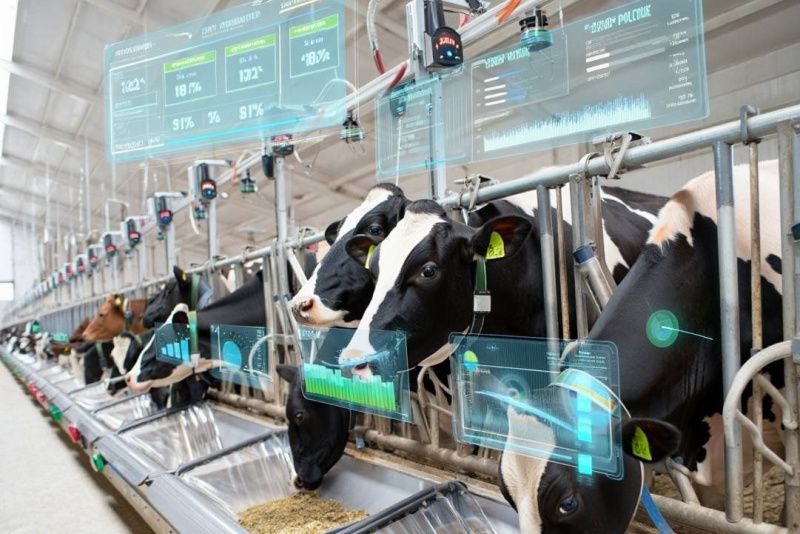
To assemble an operational picture, LactaAI draws on Supervisory Control and Data Acquisition (SCADA) systems, Laboratory Information Management Systems (LIMS) and maintenance histories. Its workflow has six steps: detection, explanation, diagnosis, recommendation, action and measurement. Once a monitored variable starts moving away from its normal range, the system flags the developing problem and supplies a suggested response. Operators also receive an explanation, a confidence score and an indication of the expected outcome. The process is designed to let production teams act before laboratory findings arrive or machinery fails.
Applications described in the article also cover milk reception. Collection delays, surrounding temperatures, seasonal variation and differences among collection centres can all influence incoming milk quality. Predictive models can assess those factors together with past laboratory findings to flag consignments that may pose a greater quality risk when they reach the plant. This application is particularly relevant to India, where processors and dairy cooperatives receive milk through thousands of small collection points. During manufacturing, monitoring can cover evaporation and drying, machinery performance, energy demand and product quality. Earlier recognition of abnormal conditions can help limit downtime, make output more consistent and preserve the efficiency with which milk becomes finished product.
Further along the supply chain, AI can link a company's sales records with external economic indicators to estimate demand by market and product category. Businesses can use those forecasts when setting manufacturing volumes, managing stock, choosing their product mix and organising distribution. These applications extend the use of predictive analysis beyond individual processing lines to collection, factory operations and commercial planning. The underlying approach is to combine information already generated by the business with monitoring and recommendations that staff can use in operational decisions.
Findability Sciences says plant operators should remain responsible for assessing recommendations and deciding whether to intervene. It emphasises that suggested actions need to be practical, understandable and explainable. For businesses introducing the technology, the company recommends starting on one line at one site, establishing measurable improvements and then extending successful applications to other operations. Its proposed performance measures include yield gains, waste reduction, energy savings and adoption by operators, alongside the accuracy of the AI models.