
Festa do Boi 2026 Adds Milk-Quality Testing to Dairy Contest
The dairy contest at the 64th Festa do Boi, held at the Aristófanes Fernandes Park in Parnamirim until October 17, has expanded its assessment beyond the quantity of milk produced. The initiative, introduced by the North Rio Grande do Norte Association of Breeders (Anorc), is examining laboratory measures of milk composition and quality from 33 animals of the Sindi, Guzerá and Sindolando breeds.
The five quality indicators added to the competition are fat, protein, casein, total solids and somatic-cell count. Urea nitrogen is also measured. The somatic-cell result is used to assess aspects of the cows’ mammary-gland health, while urea nitrogen provides information about how the animals are using protein in their feed.
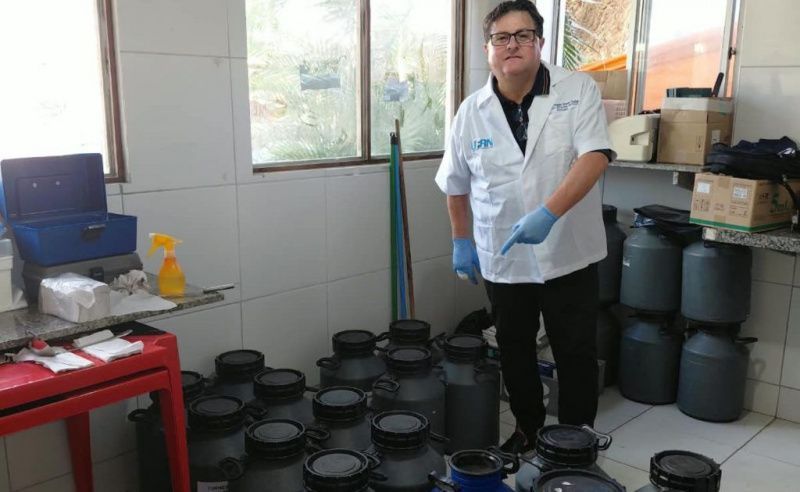
Samples collected during the contest are sent to Laboleite, the Milk Quality Laboratory of the Federal University of Rio Grande do Norte. The laboratory records the results in an application that brings together information on each animal’s production and metabolic condition. Anorc said the data are intended to support decisions on genetic selection, feeding and herd-health monitoring.
Luiz Fernando Trindade, a livestock scientist specialising in dairy cattle, said the contest shows how the animals express the genetic selection carried out on farms. “The main objective of the dairy contest is to show the genetic expression of the animals,” he said. In his view, rising annual milk yields can indicate progress in genetic improvement, while the animals’ characteristics can guide breeding choices.
Milk composition affects the manufacture of cheese and other dairy products because industrial yield depends on more than volume. Trindade said some producers may need 11 to 12 litres of milk to make one kilogram of cheese, while others can make the same amount with about 6.9 litres. He said casein is important to cheese yield and that total solids represent the milk’s contents apart from water.
The contest continues to record production volume through a fixed measurement schedule. Each animal is monitored for three days, with three milkings per day, producing nine observations in total. The accumulated volume is used to rank productive performance, while the new laboratory data can be considered alongside pedigree records to examine links between genetic origin, productivity and milk quality.
Anorc president Orlando Procópio said the results were expected to increase the exchange of information among farmers, breeders’ associations and technical professionals. The organisation said the event, which began on October 9 and also includes animal exhibitions, auctions and activities for Rio Grande do Norte’s agricultural supply chain, was using the contest to provide producers with information beyond milk volume.










