Fazenda Belluzzi Uses 70 Genomic Indicators to Breed Elite Cows
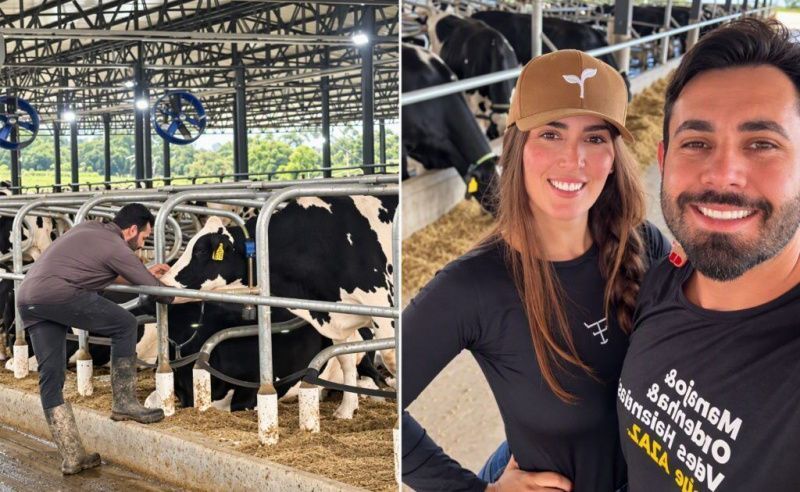
Fazenda Belluzzi was established from scratch four years ago in Cachoeira de Minas, in Brazil’s Minas Gerais state. Its mating system assesses roughly 70 genomic characteristics for every cow and compares them with international bull catalogues. The software identifies areas requiring improvement, including A2A2 milk production, animal health and reproductive performance, then selects a complementary sire.
Arnon Belluzzi, 34, developed the programme after working in technology management since the age of 17. His wife and business partner, Maria Paula Belluzzi, calls it a “bovine Tinder” because it pairs animals according to their profiles. She said that the quantity of information in large herds is beyond what people can process manually.
The couple previously worked in telecommunications in southern Minas Gerais. They considered planting mahogany before choosing dairy farming, which they associated with higher returns per square metre. In 2026, after completing the farm’s infrastructure and selling their telecommunications company, they began working exclusively in dairy production.
The programme was first used to assemble the farm’s initial herd: 106 pregnant heifers with high-grade genetics bought from major Brazilian producers. Fazenda Belluzzi now has 105 adult animals and about 45 newborn calves. To increase the main dairy herd, the farm uses beef cattle as embryo recipients for embryos from dairy cows.
The property also uses automated systems in its daily operations. A flushing system cleans the barn lanes three times a day and removes manure. The liquid portion is directed to fertigation for the maize fields that supply feed to the herd, replacing chemical fertiliser. The solid material is intended for processing into biogas, which will supplement electricity generated by the farm’s solar plant.
The couple’s three-year target is daily production of 25,000 litres of A2A2 milk, with about 520 cows in milk and 1,000 animals overall. That total corresponds to the physical capacity of the current property. Over ten years, they plan to acquire land in other states, including in Brazil’s Northeast, and produce between 100,000 and 150,000 litres a day while selling elite genetics nationally.
Fazenda Belluzzi is also considering licensing the software to dairy farmers and producers in other livestock sectors after receiving interest from other ranchers. Maria Paula Belluzzi said the aim was to help other producers achieve elite genetics and to support Brazil’s recognition as the world’s largest milk producer.