Experiential Learning Enhances Dairy Education in New England
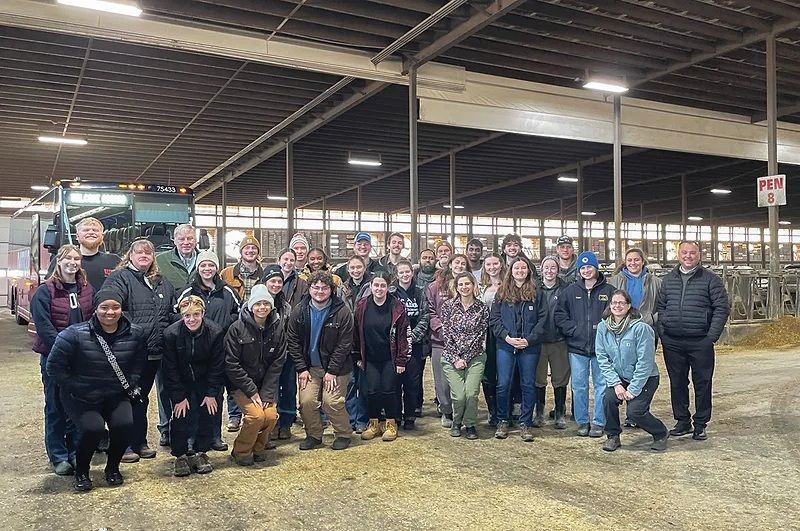
Students from six New England land-grant universities participated in an intensive week-long Dairy Winter Travel Course, designed to provide them with practical insights into the dairy industry. The course, organized annually, takes students out of traditional classroom settings and onto commercial dairy farms across the Northeast, allowing them to observe various operational models and technologies firsthand.
Throughout the course, students visited a wide range of dairy facilities, including traditional stanchion and tie-stall setups, modern parallel and rotary parlors, pasture-based seasonal grazing herds, and farms utilizing automated milking systems. This exposure allowed participants to compare different herd sizes, housing structures, and milking technologies, understanding how each is adapted to fit specific regional resources and labor availability.
In addition to observing animal husbandry practices, the course provided students with insights into dairy business management. Farm owners shared information on key management metrics, such as feed ration formulation, risk management strategies, and labor retention challenges. The visits also included discussions on environmental compliance and manure management.
The course highlighted the resilience strategies employed by Northeast dairy farms, including business diversification through farmstead cheese production, direct-to-consumer glass-bottle milk sales, and renewable energy production using anaerobic digesters.
By facilitating discussions among students, faculty, and industry professionals, the travel course addressed primary challenges in the dairy sector, such as volatile milk prices, urban encroachment, land access, and evolving environmental regulations. These discussions helped students link academic theories to real-world decision-making processes in agriculture.
The program emphasized the importance of experiential learning in preparing the next generation of dairy professionals. Students left the course with a deeper appreciation for the industry's dedication and innovation, and a clearer vision of potential career paths in herd management, veterinary medicine, dairy consulting, and agricultural policy.