Exosomm Says Milk Exosomes Could Become a Major Dairy Business
Exosomm says its research has identified bovine-milk exosomes as carriers of biological signals that may be relevant to functional nutrition. The company associates the particles with lower inflammation in inflammatory bowel diseases, improved glucose tolerance and protection against pancreatic and liver damage. It says the exosomes can survive digestion and interact with the body in ways that conventional ingredients do not.
Efrat Davash Riesenfeld, Exosomm’s chief technology officer, said the particles are delivered through extracellular vesicles absorbed by intestinal epithelial cells. Once inside those cells, the exosomes release a payload consisting of proteins, bioactive compounds, microRNAs and active lipids. “The payload is made up of several elements: proteins, bioactives, microRNAs, lipids. And each one has a different effect,” she said.
Riesenfeld referred to published research reporting therapeutic and anti-inflammatory effects in colitis. She also cited evidence that the activity can strengthen the barrier between epithelial cells, reducing intestinal permeability and, consequently, bleeding in people with Crohn’s disease and colitis. The company presents these findings as evidence associated with the ingredient’s potential biological activity, rather than as a description of the effects of ordinary milk consumption.
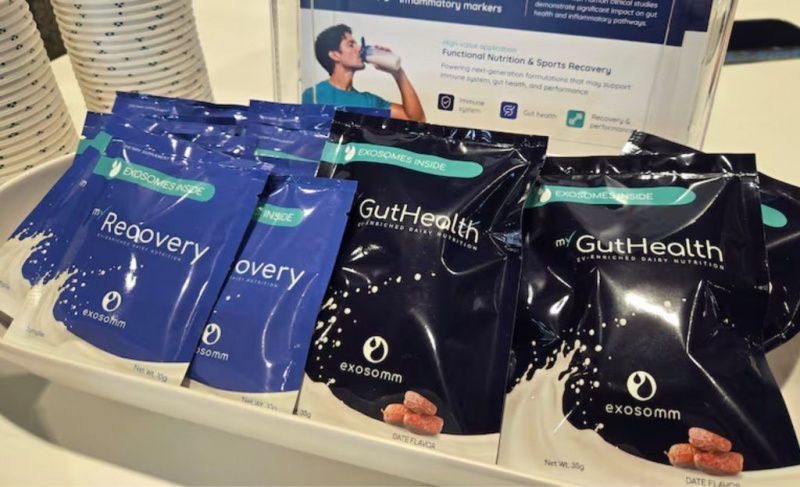
Preserving the particles has been a technical obstacle. Exosomm says standard food-safety processing destroys them, meaning that ordinary milk and yoghurt do not provide the claimed benefits. The company developed a whey-protein concentrate enriched with preserved bioactive exosomes. “We realised that this was a mess and that we should be able to use the exosomes. So we found a way to ensure and deliver them in an active and preserved form,” said Neumann.
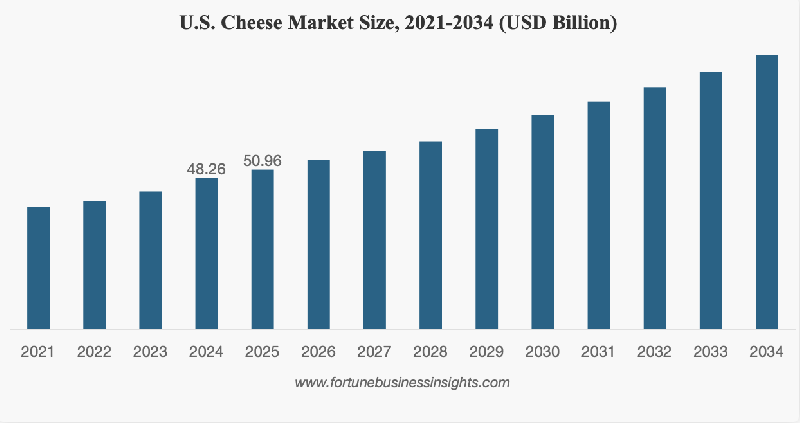
The company recovers the exosomes from whey left over after cheese production. It says the process uses neither synthetic additives nor chemical modification and produces a standardised powder with a one-year shelf life. The ingredient is intended for incorporation into snack bars, beverage mixes and other formulations. Exosomm describes the approach as a way to increase the value of a dairy by-product that can otherwise cost processors more to dispose of than it returns in revenue.
Neumann positions the product as a premium ingredient based on its scientific novelty and mechanism of action. “This is not another postbiotic or prebiotic like those already on the market. They are all excellent and have science supporting their claims, but this is something different. It is not just another ingredient,” Neumann said.
Exosomm is still seeking GRAS status, the US designation for substances generally recognised as safe. It already has an opinion from a regulatory consultant supporting commercialisation on the basis that the ingredient is ultimately “just milk”. The company says it has large-scale manufacturing capacity and can supply global markets. It is seeking partnerships, particularly in the United States, through joint ventures or technology licensing.