Eurasian Economic Union Countries Discuss Joint Agricultural Projects
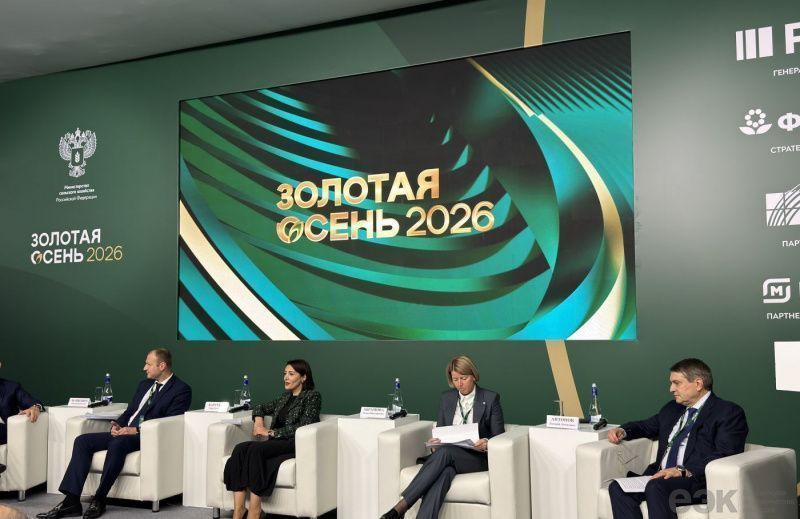
The Eurasian Economic Commission organized the roundtable "Cooperation in the Eurasian Economic Union: From Joint Projects to Effective Development of the Agro-industrial Complex" with support from the Ministry of Agriculture of Russia. The event, held during Russia's agricultural exhibition 'Zolotaya osen — 2026', discussed livestock, crop production, new technologies, and joint investment projects.
The Eurasian Economic Commission received proposals for constructing modern seed production facilities, creating wholesale distribution centers, and developing an agricultural market network. A separate focus was on the digital transformation of infrastructure related to agricultural animal turnover. The commission's report did not specify implementation timelines, investment volumes, or participant composition for these initiatives.
Gohar Barseghyan, the Minister for Industry and Agro-industrial Complex of the Eurasian Economic Commission, stated that member countries must pool resources and technological capabilities amid international competition. "To enhance the efficiency of our agro-industrial complexes in a global competitive environment, it is important for Eurasian Economic Union countries to unite efforts and implement innovative solutions. In this regard, cooperation becomes not only a tool for efficiency but a strategic necessity," she said.
According to Barseghyan, joint efforts should bring together the production, scientific, and infrastructure capabilities of multiple countries. She also mentioned businesses' interest in a financial assistance mechanism for cooperative projects in agriculture, with relevant initiatives already submitted to the Eurasian Economic Commission; however, details on potential support were not disclosed at the meeting.
Participants specifically discussed the breeding and seed production of sugar beets. A memorandum on scientific and technical cooperation was signed in this field. The document provides the foundation for joint breeding chains and cooperative research in Eurasian Economic Union countries, as well as for sharing results and developing domestic seed production bases. Signing the memorandum does not itself mean the creation of new production facilities.
For Kazakhstan, the agenda includes breeding and seed production, modernization of agricultural infrastructure, and expansion of agricultural product processing. Proposed wholesale distribution centers aim to organize supply chains between producers, processors, and trading companies, while digital agricultural markets seek to serve as the interaction infrastructure for trade participants. The implementation of specific projects will depend on their financing, capacity location, and the composition of enterprises included in cooperative chains.