The EAEU and Mongolia Plan to Transition to Permanent Free Trade
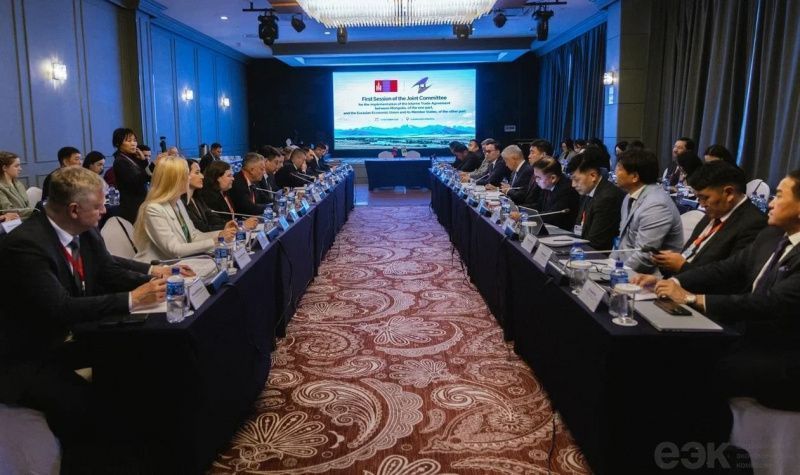
On September 14, the first meeting of the Joint Committee on the implementation of the Temporary Trade Agreement between the EAEU and Mongolia was held in Ulaanbaatar. The meeting was chaired by the Minister of Trade of the Eurasian Economic Commission Andrey Slepnev and the First Deputy Prime Minister, Minister of Economy and Development of Mongolia, Jargaltulgyn Enkhbayar. The agreement has been in effect since July 22, 2026. Kazakhstan ratified it by law on February 17, 2026, as one of the five EAEU countries.
The document provides for the abolition or reduction of import duties on 367 commodity subpositions for each party. These positions account for about 90% of mutual trade between the EAEU and Mongolia. The list of potential supplies from Kazakhstan includes grain, poultry meat, dairy products, vegetable oils, sugar, confectionery, beverages, metallurgical and chemical products, transformers, and vehicles.
The meeting discussed issues that are not regulated by tariff reductions alone. The parties reviewed veterinary-sanitary control, technical standards, and customs cooperation. The EAEU also raised the issue of access to the Mongolian market for tobacco and tobacco products, eggs, fish and meat preserves, alcohol, and flour.
A separate decision was made to agree on indicative volumes of meat supplies from Mongolia to the EAEU for 2027. Their exact values are not provided in the statement. The discussion of meat trade took place simultaneously with the consideration of veterinary requirements and product admission procedures.
Kazakhstan's trade turnover with Mongolia exceeded 133 million dollars by the end of 2025. During a business mission in Ulaanbaatar in the spring of 2026, Kazakh companies signed export contracts worth 62.6 million dollars; more than 90% of the deliveries consisted of finished non-raw goods. Previously, Kazakhstan and Mongolia set a goal to increase mutual trade turnover to 500 million dollars.
The Mongolian side was introduced to the EAEU's unified customs transit system. The possibility of partner countries joining it is provided for by the agreement of December 26, 2024. The temporary trade agreement is concluded for three years and provides for a subsequent extension for another three-year period unless the parties agree otherwise. After the first period, a review is planned to further simplify trade and lift restrictions on almost all mutual trade.
"The temporary trade agreement has come into force. Now we have a challenging path to implement it, as in a short period, literally a few years, it is necessary to ensure that neither the Mongolian side nor the EAEU doubts its necessity and the need to decide on concluding a full-fledged, permanent free trade agreement," said Andrey Slepnev.
Jargaltulgyn Enkhbayar stated: "The Mongolian side considers the Temporary Trade Agreement as a basis for developing trade and economic cooperation in the long term. We need to jointly develop solutions aimed at expanding mutual trade."