Dutch dairy farm produces approximately four million litres with 350 cows
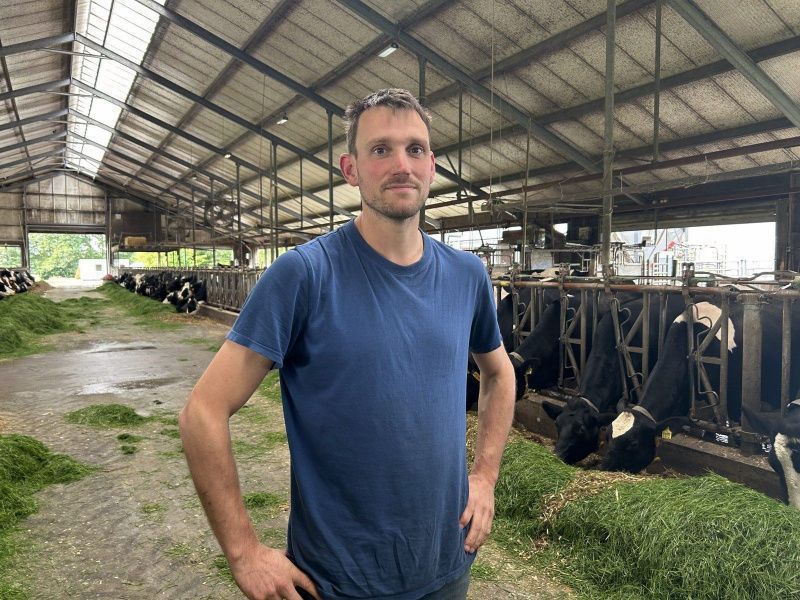
Mathijs Meiser and his partner, Florien Bleijenberg, run the 200-hectare holding alongside Meiser’s parents, Bennie and Elly. The milk has a fat content of 4.5% and protein content of 3.5%. Meiser assesses spending on technology against measurable changes in operating expenses, animal health or output. For grass harvesting and silage production, the family uses tractors guided by GPS to keep machinery on the same wheel tracks. Meiser attributes an approximately 10–15% increase in pasture yields to this practice.
Animal monitoring combines Nedap SmartTag collars with SmartSight cameras to flag cows requiring attention, including those displaying signs of lameness. Meiser previously carried out hoof trimming across the whole herd twice annually. Monitoring now allows him to select animals needing treatment, cutting labour requirements and avoiding unnecessary interventions. The system supports individual surveillance on a holding where watching every cow continuously is difficult. Meiser is also considering extending its functions to include alerts for heat stress.
Meiser places greater weight on milk produced throughout a cow’s life than on maximising its yearly output. He believes annual production per animal could reach 12,000–13,000kg, but warns that pursuing higher yields too aggressively could reduce productive lifespans and require more replacement animals. His estimate of lifetime output on the holding is around 64,000kg per cow, against a reported Dutch average of approximately 36,000kg. One animal has remained in production into its 15th year and accumulated approximately 182,000kg of milk. The herd averages about 328 days in milk. First calving occurs at roughly 21 months, about four months earlier than the national average cited in the report.
Cows receive feed twice a day. Their daily ration supplies approximately 6kg of dry matter through grass silage, 8kg through maize and 5.5kg through concentrates. Meiser intends to raise roughage’s share of the diet from around 60% to 75%, while using less concentrate. The concentrate blend contains waste sugar beet and brewing barley among its ingredients. His feeding approach emphasises rumen health and efficient resource use. The report identifies forage quality, digestibility, production levels and nutritional needs as factors determining the balance between roughage and concentrates, with adequate energy, protein and fibre required as the ration changes.
During summer heatwaves, temperatures reached 36°C and the family used fans and sprinklers to keep animals comfortable. Milk output reportedly fell by approximately one litre per cow during the hot conditions. Animals also moved less, while softer hooves contributed to further problems with lameness. The heat-stress alerts under consideration would allow cooling equipment to respond when animals need it. Meiser is considering the addition as part of the farm’s monitoring system, alongside its existing animal-health functions.
Expansion is constrained by expensive land and government restrictions on cattle numbers. The report puts agricultural land prices at approximately NZ$200,000 a hectare and cattle entitlements at around NZ$30,000 for each cow. Handling manure brings additional expense. The holding separates solids from liquid manure and keeps the liquid in a tank capable of storing 6,000 cubic metres. Limits on nitrogen application restrict the quantity that can be spread on the land. Any surplus must be moved elsewhere or undergo processing.
Bleijenberg is responsible for rearing calves, which receive milk for 114 days. The family regards spending on young stock as supporting a smoother move to a grass-based diet and earlier readiness for breeding. This early-life management sits alongside the holding’s feeding, reproductive and health-monitoring practices, with the family seeking to maintain productive animals for longer.