Drought and El Niño Threaten Pernambuco’s Dairy Belt
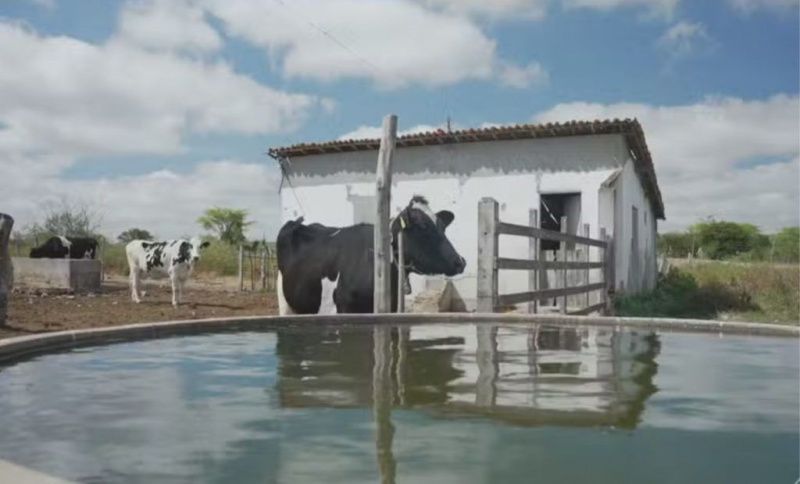
Dry conditions are affecting Pernambuco’s dairy region as the state enters a period marked by the El Niño climate pattern. Of the 99 reservoirs monitored by the authorities, 29 are classified as collapsed. Jucazinho dam, the largest in the Agreste region, had less than 4% of its capacity.
Francis Lacerda, a researcher at Pernambuco’s Institute of Agronomy, said El Niño was being intensified by climate change. “Science is forecasting that we may go through this period with a much greater degree of impact than during previous El Niños,” she said.
Pernambuco is the largest milk-producing state in Brazil’s Northeast. Its herd exceeds 2.6m animals, and production is close to 4m litres a day, or about 1.5bn litres a year. Higher temperatures, reduced pasture and limited water availability are affecting the livestock sector and have raised concerns within the state’s dairy belt.
Edclaúdio Tobias, a livestock specialist, said cattle would first prioritise survival under difficult conditions. “The animals stop producing, lose a great deal of weight and begin to yield less milk; the difficulty will come in the future,” he said.
At a farm in Garanhuns, the owner reduced the herd by almost 20% and moved water supplies to reserve them for the summer. The property has built 15 small dams and uses fans and a pipe system that sprays water over the cows. The measures were taken to limit losses as the dry period approaches.
Small farmers are expanding plantings of palma, a cactus used as cattle feed. João Marcelo Cavalcante de Almeida, who keeps 20 dairy cows, has also planted maize and invested in an artesian well in São Bento do Una. “People need to understand that El Niño is coming and prepare beforehand. Those who have not prepared—what will happen to them? Unfortunately, they will leave the activity,” he said.
Rômulo Menezes, a PhD in agronomy and the environment, said governments should issue warnings and farmers should draw on their previous experience. “Preserving resources for difficult periods is essential for sustainable survival in this region,” he said.