DeLaval launches third robot manufacturing plant in Poland
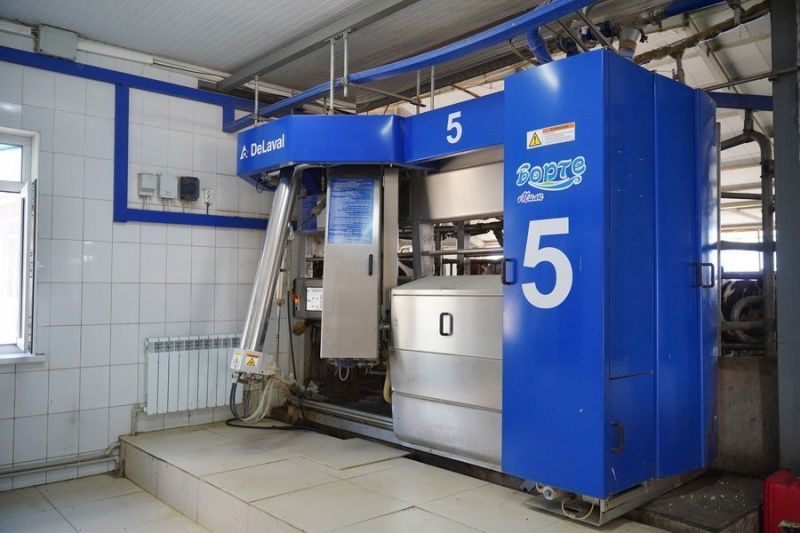
According to Andrey Morzak, farms in Europe, the United States and Canada are actively switching from conventional milking parlours to robotic equipment. He attributes this shift to labour shortages, rising labour costs and declining staff performance. For many farms, the DeLaval executive believes, automation is becoming a way to maintain milk yields and profitability and remain in business. The company offers both conventional rotary and parallel milking installations and robotic milking systems.
In Kazakhstan, DeLaval is already introducing milking and feeding robots, as well as digital tools for monitoring animals and calculating feed rations. Morzak noted that such projects are still few in number but are becoming more common. In his assessment, staff performance affects cow health, herd reproduction, productivity and milk characteristics on dairy farms. According to the executive, automation and the use of artificial intelligence can make these indicators less dependent on how well employees perform their work.
DeLaval is investing in the use of artificial intelligence to manage dairy farming operations. As Morzak explained, the company's partners can obtain additional information to support decision-making through its herd management software. The system analyses practices on numerous farms in different countries and suggests solutions to specific tasks. However, in his view, integrating processes in livestock farming is more difficult than in crop production. He identified another potential benefit of robotisation: attracting young professionals interested in technology and bringing new knowledge into teams as generations change.
Morzak sees some owners' reluctance to cover the initial costs as the main obstacle to wider adoption of these solutions in Kazakhstan. Purchasing robotic equipment requires a larger investment than installing standard milking systems. However, he said, subsequent operating and maintenance costs are lower, and the investment pays off through improved production performance and reduced dependence on staff. The executive also stressed the importance of consistent housing and milking routines for cow productivity and milk quality.
To support the construction of robotic dairy facilities, Morzak proposed revising Kazakhstan's subsidy system for new projects. In his view, farms installing robots should receive subsidies at a higher rate than farms with conventional milking parlours. He believes this difference in support would help narrow the gap in upfront equipment costs. Morzak cited existing international experience with differentiated subsidies and spoke positively of the results.
Discussing the future development of equipment, Morzak mentioned an article he had read in an American magazine about the prospects for dairy farming. It explored the possibility of using humanoid robots instead of milking machine operators. He suggested that agricultural robotisation could take different forms in 15–20 years, citing the use of similar machines in automotive assembly plants.
DeLaval also partnered with ElDala.kz on the infographic reference guide “Agribusiness in Kazakhstan 2025”, which is available to download free of charge. A dedicated page covers the robotisation of dairy farms; the material aims to introduce farmers and investors to modern agricultural technologies. Morzak stressed the importance of sharing this information throughout Kazakhstan. He said robotic solutions have been used in the country for many years and that the company is ready to support their further adoption.