Dairy experts identify CCS, mastitis and milking-machine bottlenecks
Subclinical mastitis was identified as a major concern because it can reduce milk output without visible symptoms and remain undetected for extended periods. Portuguese veterinarian Luis Pinho said somatic cell counts (SCC) can represent a largely overlooked loss on farms, where attention is often directed towards clinical cases. High SCC can also affect milk payments, increase treatment and disposal costs, and impair reproductive performance.
Pinho recommended tracking animals over time to distinguish new infections, chronic cases, recovered cows and healthy animals. He also said farms should establish whether infections are mainly contagious or environmental. Contagious cases require particular attention to milking procedures and the handling of infected animals, while environmental cases place greater emphasis on housing, bedding, hygiene, ventilation and the transition period.
Prevention and treatment decisions
His prevention framework has four elements: housing, the milking routine, the milking machine and the immune system. Pinho said a significant weakness in any one of these areas can undermine the others. Prevention must be combined with management of cows that are already infected, but he said treatment decisions should vary according to the causative agent, stage of production, animal history and likelihood of cure.
Those factors can determine whether a cow is treated, monitored, dried off earlier or removed from the herd. Pinho linked this selection process to the responsible use of antimicrobials, saying that more treatment does not necessarily produce better results. He described SCC management as a continuing cycle of reading data, making decisions and reviewing outcomes.
Targets and economic incentives
In an international context, Pinho cited 200,000 cells per millilitre as a reference level for herds and said that operating below 150,000 can support higher productivity and quality. He noted that reducing SCC from 200,000 to 150,000 is more difficult than moving from 400,000 to 200,000. In his view, the lower target may not be economically viable without a payment premium from processors. He said financial incentives could be more effective than simply imposing legal limits.
Pinho also said Brazil has room to increase its participation in international dairy markets in the coming years. He contrasted that opportunity with environmental, legislative and labour constraints on production growth in Europe. He said any expansion would require higher productivity alongside increasingly demanding quality standards, with management based on measuring results, identifying causes, making corrections and checking their effects.
Milking equipment
Gian Nascimento, a technician in agriculture and animal science trained at the Federal Institute of Southern Minas Gerais, focused on the milking parlour. He said Brazilian herds with higher yields and faster milk flow require equipment capable of keeping pace. In a presentation on equipment performance, he listed three foundations: adequate stimulation through a consistent routine, sufficient and stable vacuum, and pulsation suited to the animals’ milk flow.
Nascimento said complete replacement of a milking system is not always necessary, as technical adjustments, maintenance and component replacement can deliver gains. Preventive maintenance was cited as a leading field problem. Depending on the manufacturer, inspections may be recommended after 750 or 1,000 operating hours. Poorly adjusted equipment can increase incidents, place greater strain on workers and contribute to new mastitis cases.
Data presented by Nascimento indicated that equipment may be associated with as many as 20% of new intramammary infections. In a simulation involving 100 lactating cows, two daily milkings and 30% teat-cup slippage, the estimate was about nine new infections over one year. He estimated that preventive maintenance could return between three and ten times the amount invested.
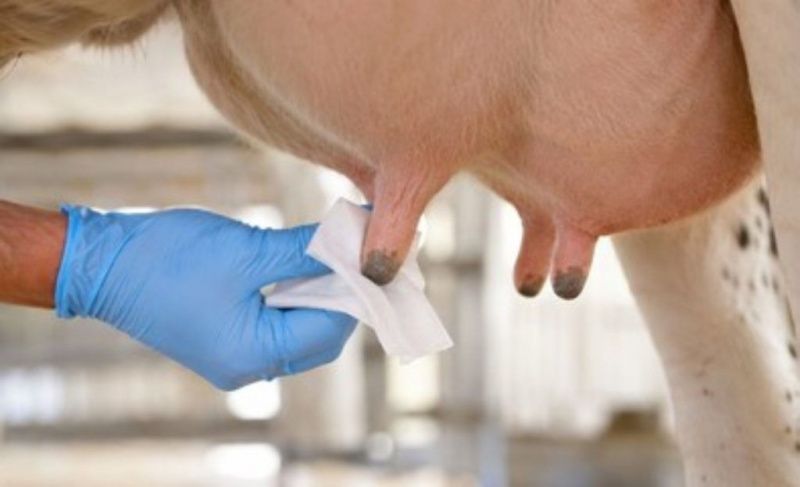
Another simulation used a farm with 100 lactating cows producing an average of 35 litres per cow per day. An investment equal to 2.5% of production costs represented approximately 0.06 Brazilian reais per litre. Nascimento defined the milking objective as removing milk quickly, completely and gently without harming teat health. He listed suitable stimulation, clean and dry teats, stable vacuum, post-milking protection, and monitoring of milk flow, milking time and teat-cup slippage as relevant operating measures.
Both speakers linked productivity and quality to the combined use of data, prevention, equipment maintenance and repeated review of management decisions. Nascimento said that understanding these data helps producers improve output, reduce losses and identify problems earlier.