Claudia Sheinbaum Defends T-MEC’s Trilateral Structure
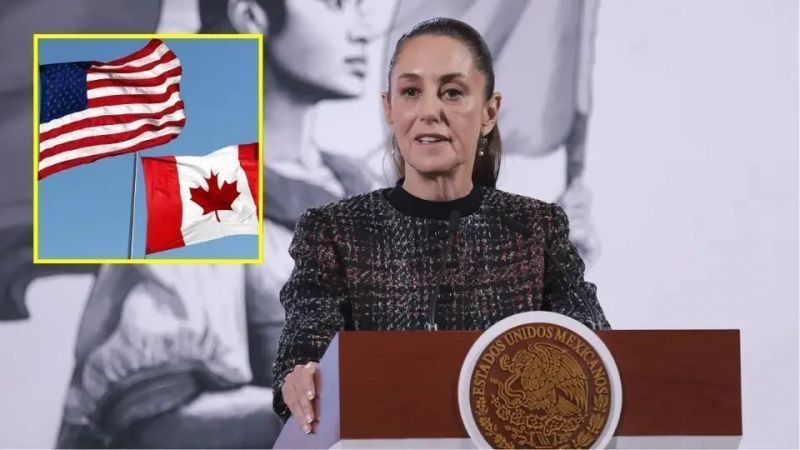
Claudia Sheinbaum said Mexico supports preserving both the validity and the trilateral design of the Treaty between Mexico, the United States and Canada, known as T-MEC. Her statement came as Washington and Ottawa faced renewed trade friction and exchanged warnings about possible tariffs.
The dispute includes potential US restrictions on Canadian imports such as dairy products, alcoholic beverages and industrial components. The disagreement has focused in part on Canada’s administration of milk tariff-rate quotas under its supply-management system.
Sheinbaum said disagreements between the two northern partners should be addressed through the technical forums and dispute-settlement panels established by the trade pact. She called for institutional dialogue and opposed measures that could divide trade across North America.
Mexico’s government identifies legal certainty under T-MEC as important for foreign direct investment and the relocation of production networks, commonly described as nearshoring. It also links the agreement to planning in industrial and agricultural sectors.
Mexico’s agricultural supply chain is closely connected to the North American market. It exports fruit and vegetables while relying on continued access to feed grains and dairy solids. The government says producers need a trilateral framework without tariffs or discretionary barriers to plan production and manage the costs of staple foods.
The position was set out ahead of the agreement’s formal review scheduled for 2026. In Mexico, the government has also faced suggestions that the trilateral pact could be replaced by separate bilateral agreements. Sheinbaum’s position emphasizes common rules of origin, integrated logistics networks and shared standards among the three countries.
Sheinbaum said her administration was prepared to act as a channel for understanding in the region and urged the governments involved to pursue negotiations. She also reaffirmed Mexico’s stated commitment to free trade, distributive fairness and national sovereignty, linking the continued strengthening of T-MEC to formal employment, shared growth and food security.