Brazilian dairy management separates cows producing 6kg and 90kg of milk
Brazil’s national average of 6.47kg of milk per cow per day is classified as low by researchers at Embrapa Gado de Leite. Bruno Carvalho and Rui da Silva Verneque said the figure does not represent the entire sector, which includes small herds used mainly for household consumption as well as highly specialised farms.
Embrapa defines daily production below 10kg as low, between 10kg and 25kg as medium, and from 25kg to 40kg as high. The researchers said that productivity on technologically advanced farms has more than tripled in recent years, although production systems remain diverse across the country.
Breed is one of the distinctions between the systems. Holstein cattle, which are used globally for high milk volumes, can produce 40kg a day under suitable conditions. Jersey cattle can reach 25kg. Among the zebu breeds, which are adapted to heat, disease and parasites, Gir Leiteiro is the highest-producing in Brazil. Genetic selection by Embrapa has been carried out since 1985; the breed now averages more than 17kg per day, with individual animals reaching 70kg.
The Girolando breed resulted from crossing Holstein and Gir cattle. Herds enrolled in Embrapa’s genetic-improvement programme produce more than 25kg per day. Agricultural competitions have recorded higher individual yields. At Expointer 2026 in Esteio, in Rio Grande do Sul, the young-cow category was won by the Holstein Santa Clara C. Valandro 38423 Flashback, which produced 93.10kg in three milkings. The adult category was won by Festleite P. Ferraboli 407 Supersire, with 85.27kg.
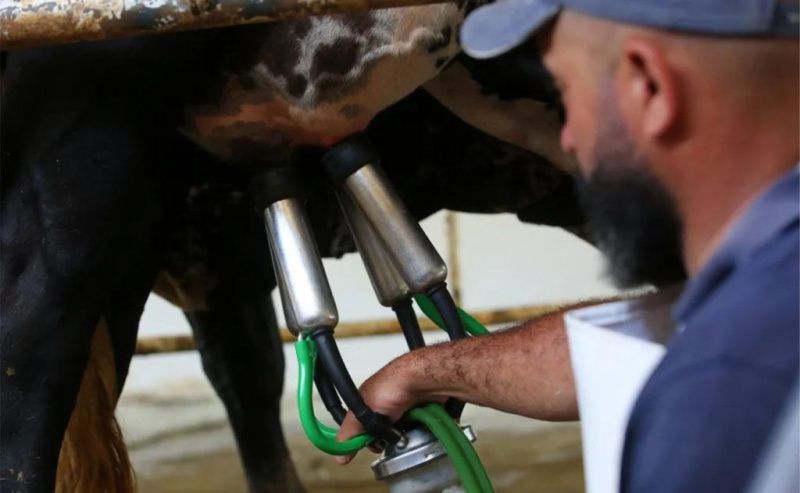
The highest figure cited was recorded by the Girolando cow Marília FIV Teatro de Naylo. In August 2019, it produced 127.570kg during three mechanical milkings at the 34th Areias Milk Tournament in São Paulo state, earning recognition from Guinness World Records.
Water intake is another element in milk production. A lactating cow can consume as much as 200 litres a day, while milk consists of 86% to 88% water. Ambient temperature also affects performance: intense cold and excessive heat require the animal to expend energy on temperature regulation. Age is relevant as well. Production generally rises during the first lactations and reaches a peak between four and six years, after which it tends to change.