Beth Temple’s 1969 Blind Date Led to Tempest Farm’s Preservation
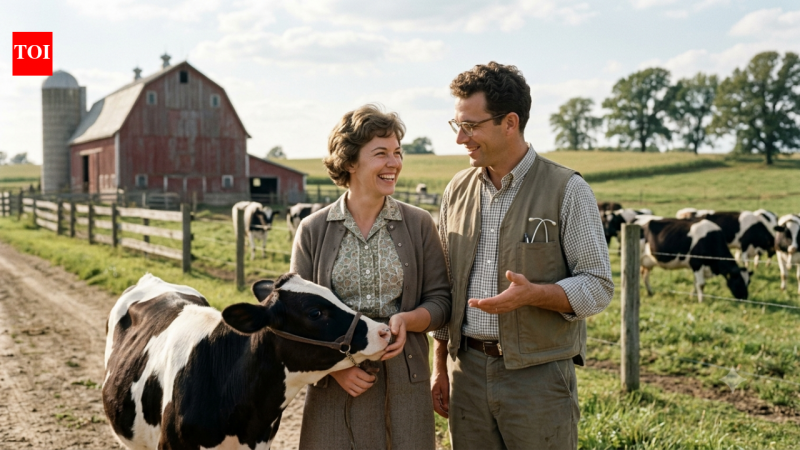
Beth Temple agreed to meet Arvid Temple after colleagues arranged the introduction because they thought the young teacher and the surgeon might suit each other. At the time, Beth was raising a two-year-old child, while Arvid already owned a dairy farm in Washington Township, in eastern Will County, Illinois. They married in May 1969.
Arvid had purchased the 160-acre property in 1965 and named it Tempest Farm after a horse he had owned before serving overseas. The farm became central to the couple’s life, particularly at weekends. Beth learned to milk cows, maintain buildings, operate machinery, use tools and tend crops. She also planted almost all the trees around the farm buildings, with one exception.
Arvid’s interest in farming dated to his childhood. His parents had emigrated from Belarus to Chicago, where restrictions on Jewish land ownership had affected their lives. The family’s small backyard had little room for cultivation, but Arvid later chose a dairy farm when he could buy land. His first horse, Tempest, was sold while he served as a US Army doctor during the Korean War in 1951. He later reused the name for another horse and for a German shepherd.
Arvid faced restrictions on Jewish enrolment at some Chicago medical schools before entering Chicago Medical School. He served in the Army and later trained in surgery at veterans hospitals, beginning a medical career that lasted about five decades. At the farm, he modernised parts of the dairy operation by adding metal siding and roofs, improving milk-collection pipes and laying concrete around the cow yard.
Beth’s farm work included using a front-end loader and a skill saw, cleaning the dairy buildings and caring for livestock. She was once kicked by a cow while treating an infected teat. On another occasion, cleaning the milking barn removed smells that the cattle used to recognise their usual places at the stanchions; it took about two hours to settle the animals again. The couple also grew food that was given to Respond Now, a social-service organisation serving people in the Chicago Heights area.
Arvid died in July 2007, but Beth continued to return to Tempest Farm. With help from carpenter friends, she spent about five years converting the old chicken coop into a workshop and storage building. It contains gardening and woodworking equipment, automotive supplies, craft materials and other tools, as well as a heated area for the farm’s cats. Beth uses the building in winter for painting, making toys and reading the newspaper.
In 2020, the first 40 acres were donated to the Forest Preserve District of Will County for permanent protection. The remaining 120 acres, along South Yates Avenue east of Beecher, are covered by a conservation easement naming the district as beneficiary; a full transfer is expected in the years ahead. The arrangements are intended to make Tempest Farm the district’s largest land donation. Trim and Pike creeks cross the property, which also contains wetlands and fertile soil supporting salamanders, green frogs, tree frogs, barn swallows and tree swallows. The conservation plan allows the land’s future use to remain connected with agriculture, farming or a nature preserve.