Automation Redefines Dairy Farming in Brazil
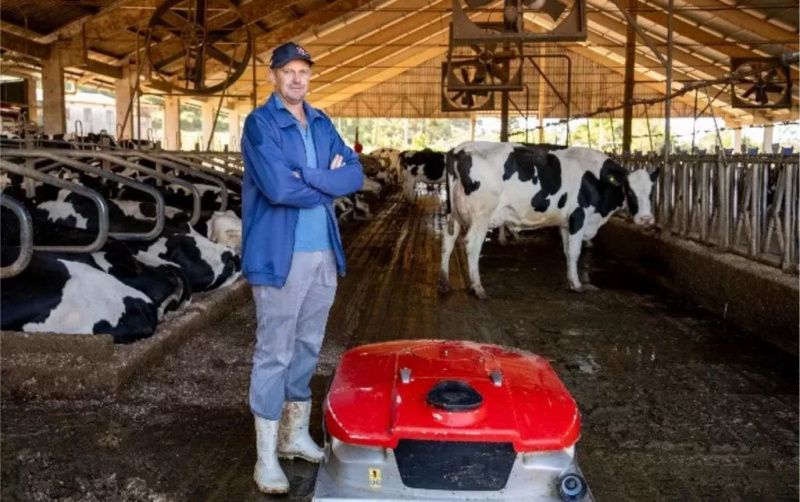
At Tambo A. Becker farm in Salvador do Sul, Rio Grande do Sul, the implementation of automated systems has marked a significant shift in dairy farming practices. The farm, which maintains 129 lactating cows, initially adopted the Astronaut A5 milking robot. About a year ago, they further integrated the Discovery Collector, a robot designed for automated cleaning of confinement corridors. This change eliminated the need for manual cleaning, which previously required a tractor and several hours of labor each day.
According to farmer Adair Becker, this automation has removed the need for a fixed cleaning schedule, allowing for better daily organization and reducing interruptions in other activities. He notes, “We no longer have to stop other tasks to perform cleaning at a set time, enabling a more relaxed work environment.”
The reliability of the cleaning robot has been a crucial factor in its adoption. After approximately a year of operation, it has not required any corrective maintenance, only routine cleaning procedures. This reliability reduces the perceived risk for farmers considering automation in their operations.
The shift to automation has also eased the workload on Luis Eduardo Becker, who previously handled daily corridor and bedding cleanings. Now, with the robot taking over corridor cleaning, he only needs to maintain the cleanliness of the bedding, simplifying his daily tasks.
Automated cleaning has had positive sanitary effects, as frequent removal of waste results in cleaner conditions for the animals. “The corridors remain clean all day, and the cows arrive at their beds cleaner, with less manure accumulation,” explains Luis Eduardo. These conditions promote animal welfare and simplify daily management, providing benefits beyond cost savings.
Tatiana Becker, another family member, highlights a generational benefit of automation, suggesting it is a compelling reason for younger family members to remain in dairy farming. She states, “Knowing that machines can assist in tasks brings more peace of mind and significantly improves quality of life.”
Thiago Souza, a commercial specialist at Lely, supports this view, noting that automated systems are designed to remove repetitive tasks from farmers’ routines, thereby enhancing the environment for animals and improving the quality of life for rural families. Automation, he adds, is increasingly important for encouraging the next generation to continue in dairy farming.