Assam Floods Displace Over 24,000 Livestock, Threatening Dairy Farmers' Livelihoods
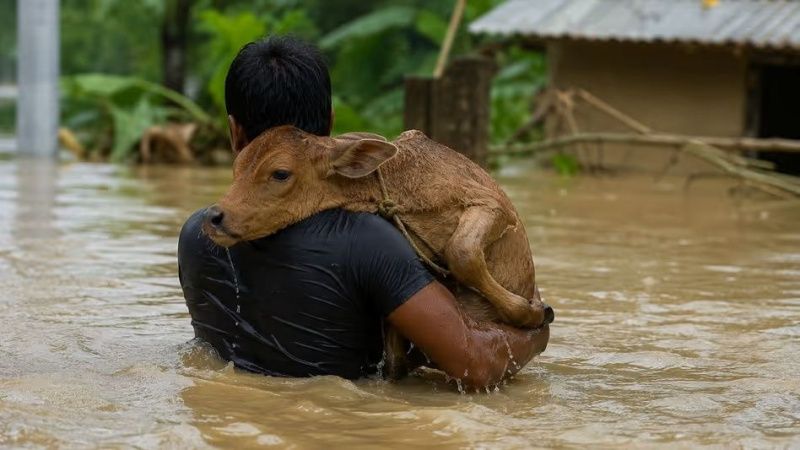
Recent monsoon flooding across Assam has severely impacted livestock-dependent rural communities, particularly in districts such as Sivasagar, Dhemaji, Golaghat, and Jorhat. According to the Assam State Disaster Management Authority (ASDMA), over 24,460 animals have been affected, including more than 13,800 large cattle and buffaloes. For many villages, especially dairy-centric ones like Nepali Khuti in Sivasagar district, the floodwaters from the overflowing Dikhow river have submerged homes and cattle sheds, leading to the loss of livestock and the destruction of smallholder livelihoods.
In these communities, milch cows are not only a primary capital asset but also the sole source of daily cash income from milk sales. The sudden loss of herds has deprived households of daily earnings, making it difficult for them to afford basic necessities or rebuild their homes. Those animals that survived the floodwaters face health and nutritional risks due to submerged pastures that have eliminated natural grazing lands. Emergency fodder supplies, including 959 quintals of wheat fodder and over 230 quintals of rice bran, are being distributed to mitigate these challenges.
Overcrowded conditions in temporary relief shelters, coupled with prolonged exposure to contaminated water, have significantly increased the risk of disease outbreaks, further threatening animal welfare. There is a discrepancy between official documentation and ground realities, as local residents report numerous cattle being swept away by rapid currents, yet ASDMA disaster registers have not officially accounted for these losses. This highlights the logistical challenges of verifying agricultural losses in heavily inundated and remote disaster zones during active relief operations.
Community leaders and relief coordinators emphasize the need for post-flood rehabilitation to extend beyond emergency human shelters. They advocate for targeted support for rural dairy recovery, including direct livestock replacement programs, veterinary care, low-interest credit, and subsidized feed supplies, to help smallholder producers restore their milk production and avoid debt cycles.