Advances in Nutrition review: Lactose maldigestion need not cause intolerance
The review examines how confusion between lactose maldigestion and symptomatic intolerance can affect nutrition advice. Its authors—Stephan Peters, Jan Geurts, Bruno Pot, Karen Knipping and Mandy Braat—consider the mechanisms of lactose digestion and their implications for public health. Peters, who manages dairy, nutrition, health and sustainability at the Dutch Dairy Association and is chief editor of Voeding Magazine, also highlighted the publication. The researchers argue that guidance on dairy consumption should account for digestive tolerance and nutritional needs.
Lactose is a sugar naturally present in milk and dairy foods. To absorb its components, the body uses lactase, an enzyme made in the small intestine, to split it into glucose and galactose. In many populations, production of the enzyme falls after childhood. This pattern, called lactase non-persistence, can leave some lactose incompletely digested. The review distinguishes that digestive process from the gastrointestinal symptoms that define lactose intolerance, which can include abdominal discomfort, bloating, gas and diarrhoea after eating foods containing lactose.
According to the authors, assuming that everyone with reduced enzyme activity will develop symptoms can produce inappropriate dietary advice. They argue that recommendations to exclude dairy across an entire population on the basis of lactase non-persistence could unnecessarily limit access to nutrients. Their proposed approach takes account of symptoms and the amounts individuals can tolerate, alongside the dietary requirements of different population groups. The review therefore challenges the use of reduced lactase activity as the sole basis for recommending dairy avoidance.
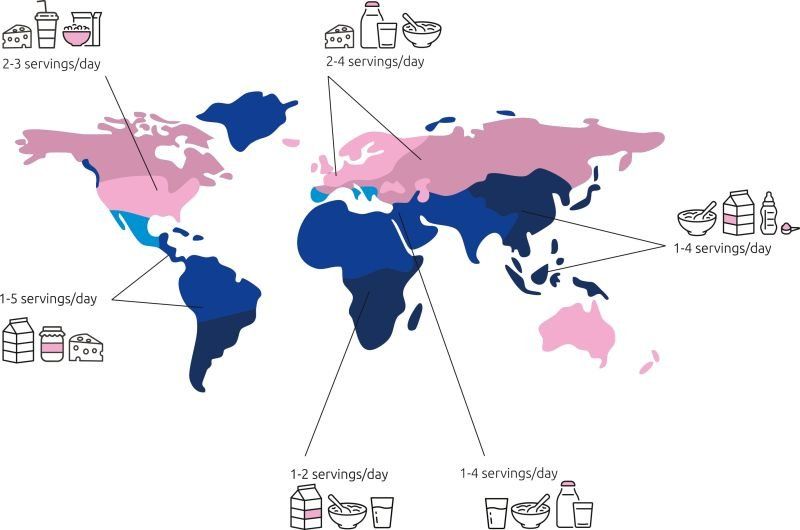
The paper also examines the inclusion of dairy in food-based dietary guidance across regions, including countries where lactase non-persistence is common. Milk and other dairy foods supply calcium, high-quality protein, phosphorus, vitamin B12 and additional micronutrients. The authors cite evidence linking dairy consumption with a lower risk of colorectal cancer and type 2 diabetes. They recommend considering these nutritional contributions and health associations together with individual digestive tolerance when formulating dietary advice.
For nutrition professionals and policymakers, the review supports guidance tailored to people's symptoms and nutritional requirements rather than broad restrictions. Foods that naturally contain less lactose, as well as suitable lactose-free alternatives, offer options for those who experience discomfort. The authors identify these choices as part of an individualised approach to dairy consumption. Their discussion covers both the ability to tolerate lactose and the contribution that dairy foods can make to a balanced diet.
The review also addresses communication between dairy businesses, healthcare professionals and consumers. Misunderstandings about lactose intolerance can affect purchasing decisions and discourage people from consuming milk, yoghurt, cheese and other dairy foods. The authors identify consumer education about lactose digestion and dairy nutrition as an opportunity for the industry. They call for evidence-based communication that explains the distinction between incomplete lactose digestion and symptoms following consumption.