A New Zealand Dairy Farm Combines Robots with Pasture
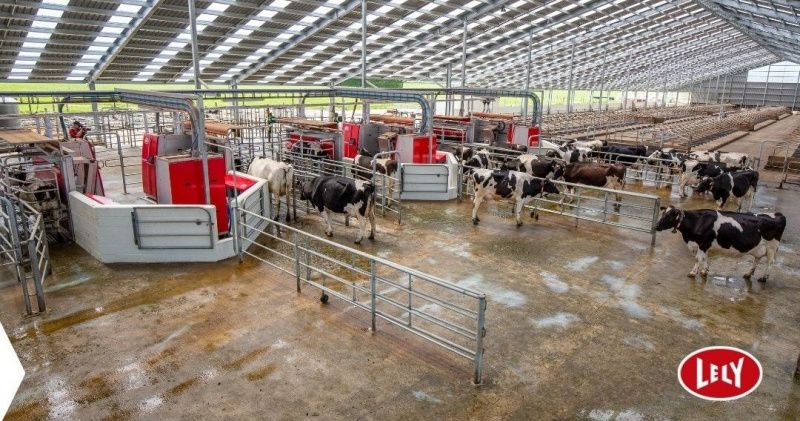
Bruce Dinnington’s farm in Dacre, near Invercargill on New Zealand’s South Island, combines a freestall wintering barn, automated equipment and pasture-based dairying. The herd numbers about 350 cows. Its machinery includes six Lely Astronaut A4 milking robots, four Lely Discovery units that collect manure, a Lely Calm automated calf feeder and a Lely Juno feed pusher.
Dinnington’s move towards automation began with the calves. After installing an automatic feeder, he observed that the animals moved in and out to feed at their own pace. When the farm’s 50-bail rotary milking shed approached the end of its 18-year working life, he sought a similar arrangement for the adult herd. A visit to a robotic dairy farm showed him cows entering and leaving the shed without being driven by staff, which preceded the decision to install the system.
The barn has 360 freestall beds. It is used during winter to provide shelter and to prevent wet conditions from damaging the soil. The farm is not operated under a certified organic label, but its design is intended to preserve pasture conditions and support animal welfare. During summer, the cows graze outside. In autumn, they spend the day on pasture and return to the barn at night for supplementary feed.
The grazing plan divides the land into four blocks, identified as A, B, C and D. Cows move between fresh pasture and the barn, where they can use the milking robots at their own pace. The automated system records data from each milking, including readings for individual quarters, milk temperature and somatic cell count. Dinnington uses these measurements to identify possible mastitis earlier than under the farm’s previous rotary arrangement.
Scales built into the robots also track changes in body weight. An alert is sent to Dinnington’s phone when a cow loses more than 7% of her weight over three days. He said the information can reveal lameness or other illnesses before they become more advanced. Instead of assessing only the udder during rotary milking, he described the system as providing information about the condition of the whole animal as it moves through the shed.
The farm was reduced to a family-run operation after the change, eliminating the need for outside staff. Dinnington said this saves about $150,000 a year in labour and housing costs. Output increased from 560 to 750 milk solids per cow. The herd now follows an 18-month calving interval, which the farm says lengthens peak lactation and adds three to four years to the cows’ lives. The investment in robotics was estimated to have a five-year payback period. Dinnington has advised farmers considering the technology to visit a robotic farm and observe its operation before making a decision.