Rajasthan's Ancient Habur Stone Pots Revolutionize Dairy Preservation
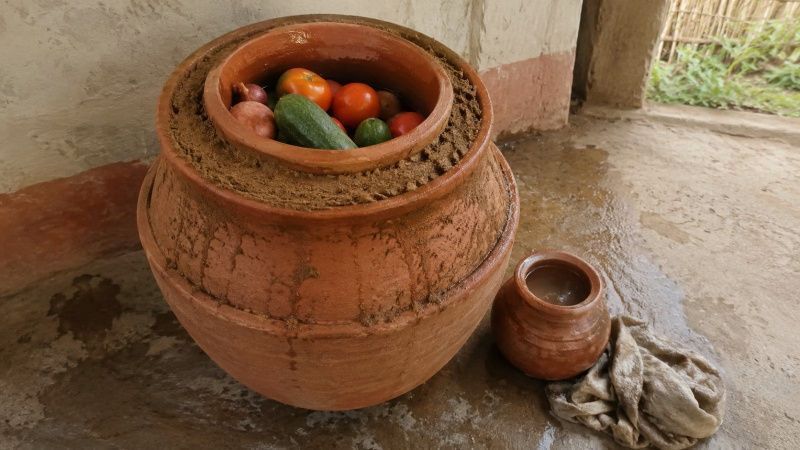
The dairy sector in Rajasthan, India, benefits from an ancient preservation technique that requires no electricity, utilizing unique vessels made from Habur stone. These pots, known locally as the "Desi Fridge," are crafted from a mineral-rich sedimentary rock found in Jaisalmer district. These vessels have been used for generations by rural households to maintain the freshness of milk and curd despite the high desert temperatures.
The Habur stone's geological composition provides natural insulation, keeping the internal temperature cooler than the external environment. This is achieved through the stone's porous structure, which facilitates micro-evaporation, effectively cooling the vessel walls and preventing rapid spoilage of raw milk.
When processing curd, the stone's mineral composition interacts with the milk, naturally releasing trace elements that promote a slow and uniform fermentation process. This results in a sweet and thick probiotic product without the need for active starter cultures, over a typical period of 6 to 12 hours.
This method offers insights into low-cost, sustainable food systems, especially valuable for smallholder dairy producers in developing regions. The ability to maintain consistency in dairy products without electricity addresses critical challenges in these areas.
Recently, there has been a growing interest in the commercialization of Habur stone pots beyond their traditional use. Urban markets and wellness influencers are adopting these pots as sustainable, plastic-free alternatives for artisanal dairy processing, highlighting their potential in modern eco-conscious kitchen practices.