Global Dairy Prices Decline Amid Sufficient Export Supplies
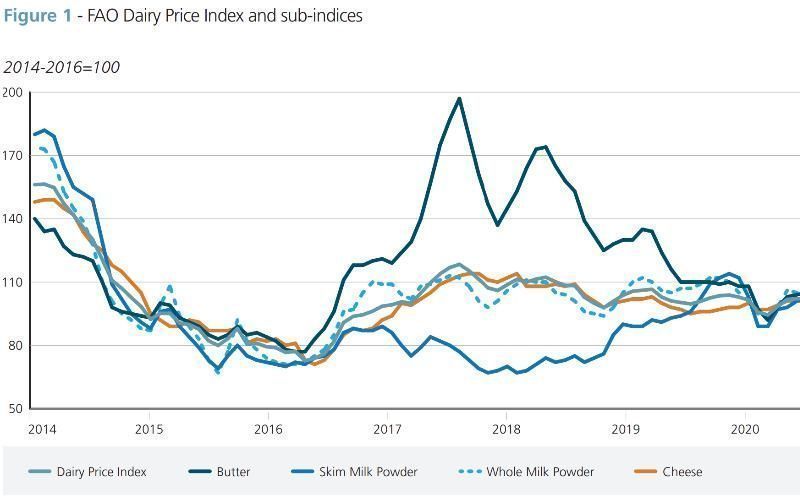
The Food and Agriculture Organisation of the United Nations (FAO) reported that the Food Price Index decreased for the fifth consecutive month in January, averaging 123.9 points. This marks a 0.4 percent decrease fr om the previous month and a 0.6 percent decrease year-on-year. The decline is attributed to easing prices across key food commodities, with dairy products experiencing the most significant drop.
The FAO Dairy Price Index fell by 5.0 percent fr om December, primarily due to lower prices for cheese and butter. This drop was attributed to ample export availability from major dairy-producing regions, which outweighed seasonal demand. Meanwhile, skim milk powder prices experienced an increase, thanks to renewed import demand from the Near East, North Africa, and parts of Asia.
Global dairy markets are currently characterized by an oversupply of fat-based products, while protein-based ingredients continue to be in demand in emerging and deficit regions. This trend coincides with broader commodity price movements, wh ere meat and sugar prices declined, while vegetable oils saw an increase due to supply constraints and biofuel-driven demand.
According to FAO forecasts, global cereal production in 2025 is expected to reach a record 3,023 million tonnes, driven by higher wheat yields in Argentina, Canada, and the European Union, as well as increased maize plantings in China and the United States. This abundance in cereal production is anticipated to support continued price stability in food commodities.
For the global dairy sector, the current market phase is marked by supply-side comfort rather than demand stress. While this situation provides relief to food-importing nations, it may exert pressure on farmgate prices in exporting countries, especially wh ere production costs are high.