White Cheese Does Not Necessarily Contain Less Sodium Than Yellow Cheese
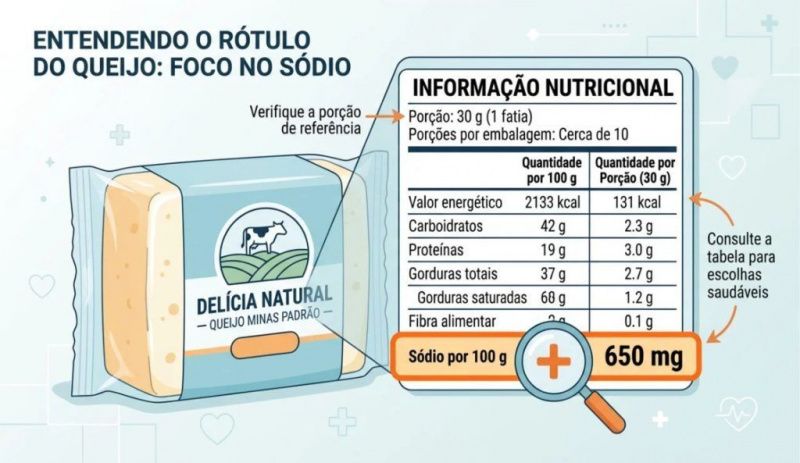
The findings challenge a familiar way of comparing cheeses. White cheese is not necessarily lower in sodium than yellow cheese, and products that belong to the same category may also differ considerably in composition.
The analysis covered 156 samples and identified significant variation among the products examined. The colour of a cheese therefore cannot be used as a dependable measure of its salt or sodium content. The type of cheese alone is also insufficient for making a precise comparison.
A more consistent method is to examine the sodium value listed for 100 grams. This standardises the quantity being compared, even when manufacturers recommend different serving sizes. Comparing only the sodium listed for a suggested portion can produce a less direct comparison between products.
The amount actually eaten remains relevant. A product may show a particular sodium level for one serving, but total intake depends on how much is consumed. For this reason, both the value per 100 grams and the quantity eaten are relevant when someone is monitoring sodium intake.
Packaging provides another indicator through the “HIGH IN SODIUM” magnifying-glass label. For solid or semi-solid foods, the designation is used when a product contains at least 600 milligrams of sodium per 100 grams, according to the criteria cited in the source text.
Sodium intake can also come from foods eaten alongside cheese. Bread, processed meats, sauces and other products may contribute to the daily total. The source text says that replacing a visual assumption with a comparison of equivalent nutritional values allows consumers to assess individual products more directly.