UPAEP and Danone open talks on dairy-sector training in Mexico
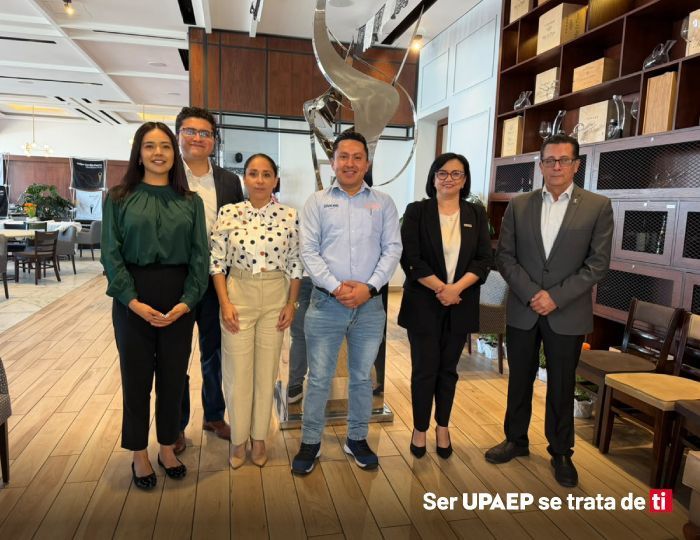
The meeting took place on the campus of the Universidad Popular Autónoma del Estado de Puebla (UPAEP). Participants from its health-sciences vice-rectorate and alumni and professional-placement office included Manuel León Rodríguez Vudoyra, Diana Morales Koelliker and Jesahel García Flores. Danone was represented by Ricardo Isidro Trujillo, its associate human-resources manager. The discussions established areas for joint work linking university education with the operational requirements of Mexico’s dairy and food businesses.
Danone, a French food multinational, operates 34 manufacturing plants and more than 100 distribution centres in Mexico, employing over 15,000 people, according to the account attributed to UPRESS UPAEP. Its brands include Danone, Activia, Danonino and Oikos. Mexico ranks among the company’s ten most strategic markets worldwide. The discussions covered opportunities to connect university expertise with the company’s manufacturing and distribution activities.
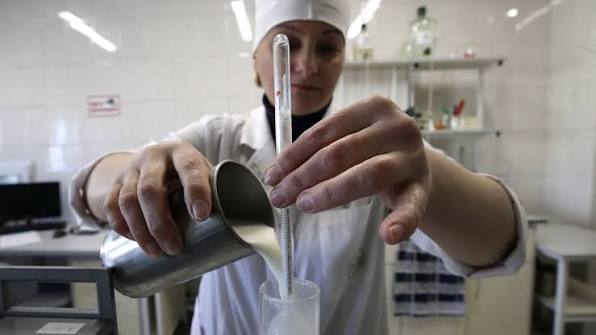
The account places the training initiative in the context of food-safety requirements for yoghurt and other fermented dairy products. It describes specialist education spanning animal husbandry, industrial processing and microbiology, alongside direct links with processing facilities. At farm level, it discusses hygienic milk production in mechanised milking parlours, including forestripping and antiseptic teat preparation to control environmental mastitis and somatic-cell counts. After milking, raw milk is rapidly cooled to 4°C to limit bacterial multiplication and stabilise titratable acidity before collection.
For industrial processing, the account describes continuous pasteurisation above 72°C, or ultra-high-temperature treatment at 138°C for four seconds combined with aseptic packaging. It links dairy-processing expertise to thermal treatment and controlled fermentation using specific probiotic cultures. These technical subjects form part of the article’s broader discussion of the skills used in producing functional dairy foods.
In its discussion of the Mexican retail market, the account contrasts cow’s-milk yoghurts and fermented drinks with imitation products containing imported dried whey, modified starches and hydrogenated palm fats. These products are sold through grocery shops, small general stores and supermarkets. It cites NOM-155-SCFI-2012 and the yoghurt standard NOM-181-SCFI/SAGARPA-2018 in relation to composition and minimum milk-protein requirements. The account presents training in food science and clinical nutrition as a means of supporting the development of functional foods backed by scientific evidence.
The article also examines dairy-farm operating costs in Puebla, Jalisco and Guanajuato. It puts cattle feed at more than 70% of current operating expenditure per litre of milk on commercial and family farms, identifying maize silage, alfalfa hay and commercial protein concentrates as feed components. It argues that knowledge transfer, more efficient logistics, lower processing losses and higher-value dairy products can support processors’ ability to maintain stable purchasing contracts and remunerative farm-gate prices, helping farmers finance animal-welfare and biosecurity measures.
The account identifies sanitary traceability, water management in dairy-producing catchments and energy efficiency in processing plants as potential fields for projects involving graduates. It also names Mexico’s agriculture ministry, the Secretaría de Agricultura y Desarrollo Rural (SADER), and education ministry, the Secretaría de Educación Pública (SEP), in its discussion of public institutions that could promote university-business innovation networks.