Stepan Ten: European and American farmers are switching to dairy crossbreeds
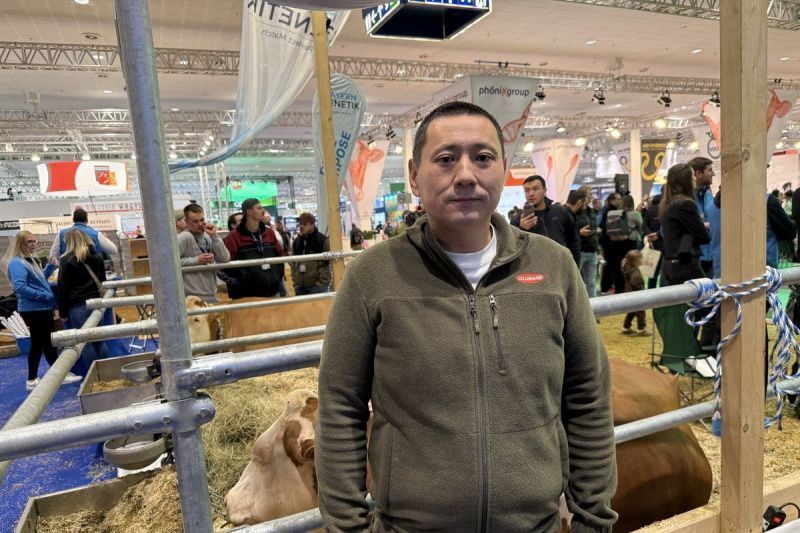
Stepan Ten, who heads the Bek+ farm in Kostanay Region, told ElDala.kz that he first visited EuroTier in 2014 and has attended every edition since. He sees the main purpose of these trips as learning about technologies that will shape dairy farming over the next five to ten years. He said he had seen solutions that are only now starting to be introduced in Kazakhstan at the exhibition six to ten years ago. Among current changes, Ten highlighted the declining size of dairy cattle and the growing importance of protein in milk pricing: previously, fat was the main component used to calculate payments.
As the farm manager explained, breed selection used to be driven primarily by a single production objective: Simmentals were kept for milk fat content and Holsteins for volume. Now farmers want to combine the health of Jerseys, the productivity of Holsteins and the milk fat content of Simmentals. Ten described a rotational system: Holstein cows are inseminated with Simmental semen, the resulting offspring are inseminated with Jersey semen, and the cycle is then repeated. In his assessment, these animals better meet farms' requirements for health, milk yield and milk composition.
However, the farm cannot sell young stock produced through crossbreeding as pedigree breeding cattle. Ten cited the use of sexed beef-breed semen as an option for cows with limited breeding potential. The resulting bull calves can be raised for beef.
Bek+ intends to genotype its entire herd, but the high cost is limiting the pace of this work. With support from the Republican Chamber of Dairy Cattle Breeds, 200 animals have been tested. Ten cows with the best genetic characteristics were selected from among them to form the herd's breeding nucleus. Ten considers them potential dams of high-quality bulls. If a suitable laboratory were available in Kazakhstan, the farm could collect eggs from them for reproduction. Another option he mentioned was using expensive, high-quality sexed semen to further improve and preserve these genetics.
Another observation Ten made at EuroTier concerned the transfer of routine tasks to machines, including through the use of artificial intelligence. He said automation and robotics are covering an increasing number of processes, while farm workforce numbers are declining. In Kazakhstan, the adoption of robots is currently constrained by the availability of workers and labour costs that farms can afford. In Germany, dairy farm employees earn several times more than their counterparts in Kazakhstan, which, Ten explained, encourages the use of milking robots. He expects robot adoption in Kazakhstan to accelerate if labour shortages emerge.
Describing the situation facing European producers, Ten pointed to restrictions on phosphorus and potassium emissions. He said these prevent farms from expanding because of the need to dispose of accumulating manure. He described the profitability of European dairy production as low: in his assessment, many farmers lack the funds to hire staff.
As an example, Ten cited a farm he had visited a few days before the interview, where 300 cows are milked daily. The entire farm is run by just two people—the married couple who own it. According to Ten, the daily demands of feeding and milking the animals mean they cannot even visit their daughter and grandchildren: there is no one to take their place on the farm.