Rare systemic granulomatous disease killed 19 cattle in Brazil
The investigation covered dairy and beef farms in six municipalities, with participation from Instituto Federal Catarinense (IFC), Universidade Federal de Santa Maria (UFSM) and the University of Georgia in the United States. All affected cattle were adult females aged between two and six years: 16 Holsteins, one Jersey and two Brafords raised for beef. Fourteen cases occurred from November 2021 to January 2022, followed by five between April and June 2022. A review of 1,769 cattle post-mortem examinations conducted by the laboratory from 2013 to 2022 found cases meeting the disease definition only within those periods. During the outbreak's first 55 days, affected animals accounted for 36.8% of the laboratory's 38 cattle necropsies. The proportion developing clinical disease on individual farms generally ranged from below 1% to 3%.
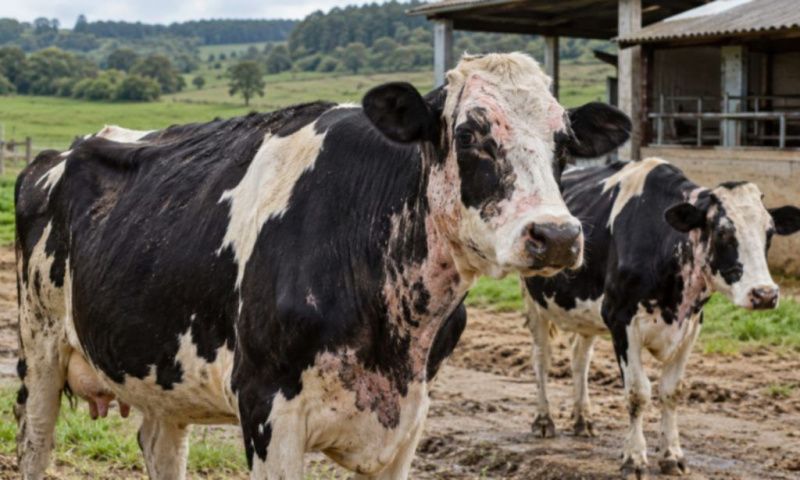
Illness lasted between three and 30 days. Some cows lost as much as 90% of their milk output, while 15 of the 19 animals developed fever, with temperatures reaching 40.5°C. Other signs included substantial hair loss, particularly on the head, neck, chest and limbs; severe itching and skin damage; weight loss; lethargy; reduced feed intake; enlarged lymph nodes; and, in some animals, bleeding. One cow scratched its face so intensely that it injured itself. Post-mortem examinations identified granulomatous inflammation in the kidneys in 84% of cases and cardiac involvement in approximately 79%. Lesions also affected the liver, spleen, adrenal glands and bone marrow. Veterinary treatment, including antimicrobials, anti-inflammatory drugs and other supportive measures, failed to prevent death in the animals studied.
Systemic granulomatous disease involves immune cells accumulating into inflammatory structures called granulomas across multiple tissues and organs. Similar conditions in cattle have previously been associated with hairy vetch (Vicia villosa), citrus pulp and certain feed compounds. Hairy vetch, grown as forage and a cover crop in temperate regions, can trigger hypersensitivity reactions involving the skin and internal organs. Investigators examined pastures, stored feed and feeding histories in the Santa Catarina cases. Their assessment excluded hairy vetch exposure and citrus-pulp feeding. Tests for the bacterial and fungal agents examined were negative. Virological findings and the pattern of tissue damage led the authors to consider a viral origin unlikely.
Feeding arrangements differed among the farms. Some dairy cattle were housed and fed formulated rations containing silage, grain and supplements; others grazed and received additional feed in semi-intensive systems. The two Brafords were kept entirely on pasture and given a commercial protein-mineral supplement. Across these systems, the affected animals consumed manufactured cattle-nutrition products supplied by two companies. The researchers treated those products as a possible shared exposure. Early cases gradually ceased as stocks from particular batches were used up. The five later cases occurred on farms using a batch produced in November 2021 and purchased through the same retailer. Researchers subsequently observed no further cases associated with the 2022 batches they monitored.
The authors considered this timing consistent with exposure to a temporary dietary factor. They also proposed that differences in individual immune responses might help explain why only a small proportion of exposed animals became ill. Investigators were unable to complete a comprehensive analysis of the supplements and their components. Access to detailed formulations, raw-material origins and information about possible production changes constrained efforts to connect a particular ingredient with the lesions. Experimental reproduction of the illness was also constrained by technical, financial and ethical difficulties. The study retained dietary exposure as a hypothesis, with the causal agent remaining unidentified.
A separate investigation presented in 2024 by researchers affiliated with Universidade Federal do Rio Grande do Sul described seven cattle from farms in Rio Grande do Sul and Santa Catarina with signs compatible with systemic granulomatous disease. These included hair loss, intense itching, weight loss and inflammation in several organs. The investigators likewise found no established traditional cause. Reports of granulomatous illnesses of undetermined origin have also involved dairy cattle in New Zealand and Argentina.
Brazil's Ministério da Agricultura e Pecuária (Mapa) regulates and inspects businesses manufacturing and selling animal-feed products, under requirements covering product quality, safety and traceability. The article recommends retaining purchase records, batch identifiers, package-opening dates, supplier details and information on formulation changes to assist veterinary investigations. It advises farmers whose cattle develop comparable signs to obtain veterinary assessment and to consider laboratory testing and necropsies for severe illness or unexplained deaths. It also recommends preserving dietary records, identifying feed batches, seeking technical advice before changing management and notifying the appropriate authorities when warranted by a substantiated suspicion involving a feed input.