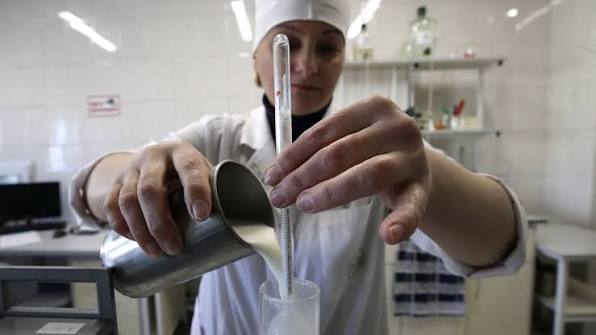
Power cuts force Brazilian dairy farmers to discard thousands of litres
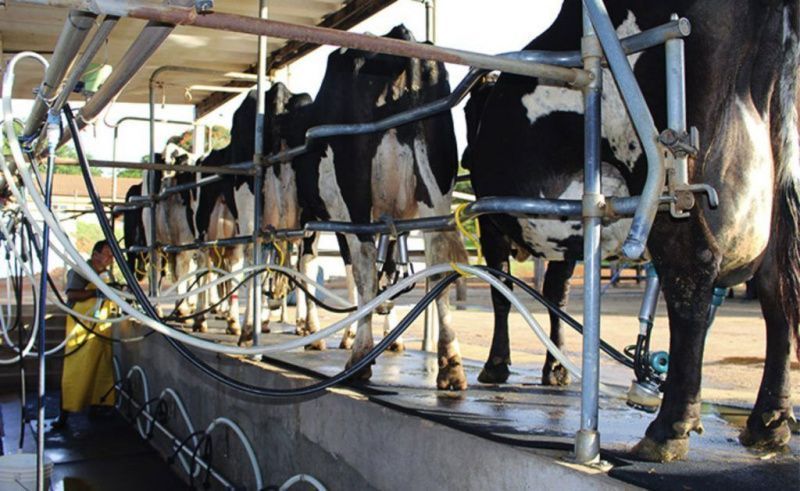
At the end of September, Darci Vorpagel, a farmer in Linha Arroio Fundo, Marechal Cândido Rondon, went without electricity for approximately 52 hours. A scheduled shutdown was followed by a storm-related outage. Unable to operate his milking machine or keep milk chilled, he discarded 5,000 litres. Following storms on October 24th and 25th, Keli Silva, in Diamante do Oeste, lost more than 2,500 litres during four days without electricity, despite using a generator. In Perobal, Júnior Amaduci discarded 500 litres of milk and 300 litres of yoghurt, according to Gazeta do Interior.
Paraná’s Sistema de Tecnologia e Monitoramento Ambiental (Simepar) forecasts above-average rainfall in several parts of the state. Its October 8th assessment placed the largest positive rainfall departures through December in the Centre-South, South, West and Southwest. Rain concentrated into a few days brings risks of severe storms, hail and lightning. The forecast includes the influence of El Niño, which is expected to remain active at least until March 2027. The United States’ National Oceanic and Atmospheric Administration (NOAA) estimated an 83% probability that the phenomenon would reach very strong intensity. Storms can bring down trees, damage electricity networks and degrade roads, disrupting both farm operations and milk transport.
Marcelo da Costa Silva, an independent dairy consultant with nearly 30 years of industry experience, said the interval between milking and industrial processing leaves little room for delays. “Dairies’ raw material starts to deteriorate the second it leaves the cow. Raw milk needs to be collected, transported in insulated trucks, tested and processed within a very short window, generally up to 48 hours. Any delay on the road means the total loss of thousands of litres,” he said. Collection is particularly vulnerable where small and medium-sized farms are reached by unpaved rural roads. Heavy rain can make muddy stretches impassable. Silva described the overwhelming majority of local rural roads as dirt roads without maintenance. When access problems coincide with electricity failures, milk remains in farm tanks without refrigeration while producers await either restored power or a collection vehicle.
Farm refrigeration infrastructure developed following a regulatory change introduced in 2002. The Ministry of Agriculture’s Normative Instruction 51 set requirements for milk preservation and transport, gradually replacing delivery in churns with refrigerated bulk tanks on farms and insulated collection trucks. Normative Instruction 76, issued in 2018, sets identity and quality standards for refrigerated raw milk. Milk must arrive at a processing plant at no more than 7°C, with temperatures up to 9°C permitted exceptionally. Silva recalled that, early in his career, milk remained in churns at ambient temperature for hours, often in sunlight, before travelling to factories in open vehicles. Refrigeration improved control over raw-milk quality while making electricity essential to continued operations.
Heat also affects milk preservation and the conditions in which dairy animals are kept. “We live in a tropical country, and one of the enemies of quality is heat,” Silva said. He described milk as a living raw material whose composition changes with animals’ feed, stage of lactation and climatic conditions. Such variation creates difficulties for processors making products that require consistent composition and quality. In cheesemaking, changes in milk characteristics can affect yields and the uniformity of the finished product. Animal management, milking practices and storage on the farm therefore form part of maintaining the standards required for industrial production.
The losses come as farmgate prices and operating costs move in opposite directions. In September, the average price paid to milk producers fell by 5% to R$2.76 per litre, according to Cepea/Esalq-USP. Dairy farming’s effective operating cost, known as COE, increased by 0.46%, driven mainly by higher maize and soyabean-meal prices. Discarding milk removes sales revenue while farmers continue to bear feed, labour and maintenance expenses. Interruptions to refrigeration or collection can consequently affect the financial return from several days of work.
Processors also depend on regular deliveries to sustain factory operations. Reduced or interrupted supplies can disrupt production schedules and the availability of milk for dairy products. Silva called for industry support for producers during the low-production season, as well as for genetic improvement and farm profitability. “The dairy farmer is not merely a supplier, but an important strategic partner. If the industry does not support farms during the low-production season, in genetic improvement and in profitability, it simply runs out of quality raw material,” he said.