Ponds Need Constructed Wetlands to Reduce Nitrogen Loss
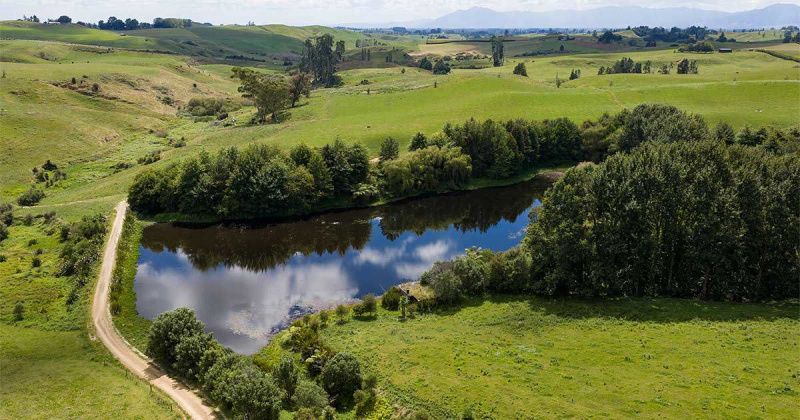
Open-water ponds can serve several purposes on dairy farms. They provide habitat for birds and fish, retain sediment and phosphorus, add biodiversity and may offer recreational value. They can also remove limited quantities of nitrogen, but reducing nitrogen loss requires a system designed for that purpose.
Nitrogen removal in a wetland depends on denitrification, a natural process carried out by bacteria. The process requires shallow water, wetland vegetation, organic material and slow movement through the system. Deeper ponds with open water generally lack the dense plants and residence time needed for effective nitrogen processing.
Constructed wetlands are normally designed with emergent vegetation covering about 70% of the area. Water is kept at roughly 300–400mm deep, allowing plants to establish and grow. The layout is intended to make water circulate around the wetland rather than pass directly through it, using a width three to ten times its length and features such as fingers or peninsulas.
The wetland must also be appropriately scaled. The recommended area is 1–5% of the catchment contributing water to the system. These design features slow the flow and increase the time water remains in the wetland, a condition identified as important for nitrogen removal.
A pond can still form part of the wider treatment system. Its deeper water is suited to settling sediment and phosphorus and to supporting bird and fish habitat. When positioned at the beginning of a constructed wetland, a pond can contribute to the wetland’s performance and service life. It should be large and deep enough for material to settle, with flow controls that slow water before it enters the planted area. Native wetland species in the main wetland are important for denitrification and additional nutrient removal.
The appropriate design depends on the intended objective, which may be nitrogen reduction, sediment and phosphorus capture, biodiversity, duck habitat, recreation or a combination of these aims. In one wetland-development project, ecological planting and careful earthworks converted an unproductive gully into a terraced wetland. Environmental DNA collected from the main drain identified more than 800 distinct species in and around the water, including an endangered native fish. Existing plants were lifted and replanted on the wetland floor, helping control costs and support native regeneration. The source page was last updated on 24 September 2026.