Penn Vet Receives $1.5m Grant for Dairy Calf Facilities
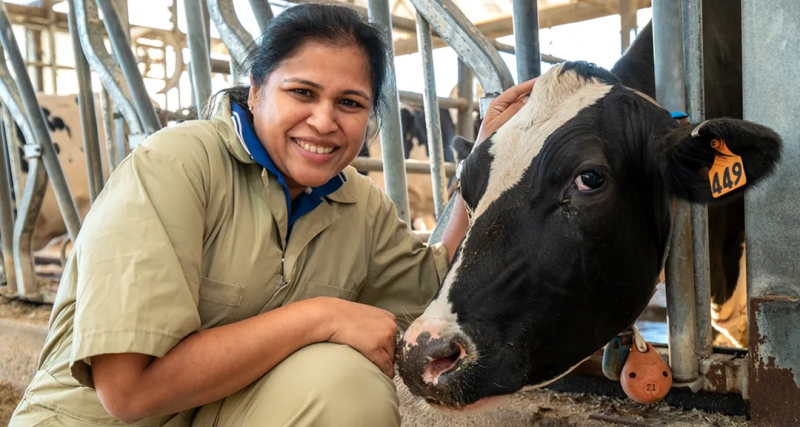
The grant was awarded to Dipti Pitta, a professor of ruminant nutrition who is leading the project. The planned facilities will allow researchers to examine how care during the calf and heifer stages relates to later health, welfare, productivity and resilience.
Researchers will follow animals through early development and their move into the milking herd. Data gathered across that period will be used to establish evidence-based benchmarks for raising dairy cattle. The project is designed to address gaps in knowledge about the longer-term effects of interventions made during the first stages of an animal’s life.
Facilities and monitoring
Construction and installation will proceed in phases. The site will include separate areas for newborn calves, growing heifers and heifers approaching lactation. Its final phase will add automated feeding, environmental management, behavioural observation and other precision technologies.
Those systems will record information on feeding behaviour, development and welfare. The project will also create a longitudinal database covering several stages of growth, enabling the team to examine links between early management and later performance as animals enter the milking herd.
Training and industry use
Marshak Dairy will provide a practical setting for students in veterinary medicine and animal science who are preparing for work in dairy production and animal health. It will also operate as a demonstration site for producers interested in research findings, technologies and management methods that could be used on their farms.
Pitta also leads Penn Vet’s Agricultural Systems and Microbial Genomics Laboratory, which studies the microbial composition of the ruminant gut. The new infrastructure will support work on the early-life microbiome and its relationship to later growth and performance, alongside research intended to improve animal health, production and welfare and reduce methane emissions.
The USDA grant requires matching funds. Penn Vet will meet that requirement through institutional funding, other grant programmes, philanthropy and corporate sponsorships. The completed facilities are intended to expand the school’s research and teaching capacity and provide evidence for decisions about calf rearing and heifer development.