Mexican municipality increases livestock-feed support by 30%, distributing 157 tonnes

Mayor René Chavira launched the programme in Palo Blanco, a community within the Ciénega de Ortiz rural district. The official account puts spending on dairy concentrate at 258,750 pesos and the value of the rolled maize at 254,200 pesos, giving a combined feed allocation of 512,950 pesos. The assistance package also includes 15 water-storage tanks and seven solar water heaters. Both the programme’s budget and its operational scope have increased compared with previous rounds.
The municipal initiative is intended to help livestock producers meet higher production costs. Alongside the input distribution, road infrastructure works worth more than 7m pesos cover the rehabilitation of farm-access roads and construction of a vehicle bridge connecting Palo Blanco with El Terrero. The source describes recurrent droughts and winter frosts in Chihuahua’s arid and semi-arid areas as factors raising the cost of harvested forage and increasing producers’ reliance on feed grains bought on the open market.
According to the account, cattle feed represents more than 70% of current operating expenditure per litre of milk on commercial dairy farms and family livestock holdings. Their rations include maize silage, alfalfa hay and commercial protein concentrates. It describes direct feed assistance as easing the fortnightly cash requirements of small and medium-sized producers, helping them maintain the body condition of lactating cows without selling productive breeding animals.
The article also outlines the nutritional role of the distributed products during winter and the dry season in northern Mexico. It describes rolled maize as a source of rumen-digestible starch that promotes propionic-acid production, supporting glucose formation and milk-protein synthesis. Dairy concentrate supplies amino acids and minerals to balance herd nutrition. The account links timely provision of these feeds with the production of milk solids.
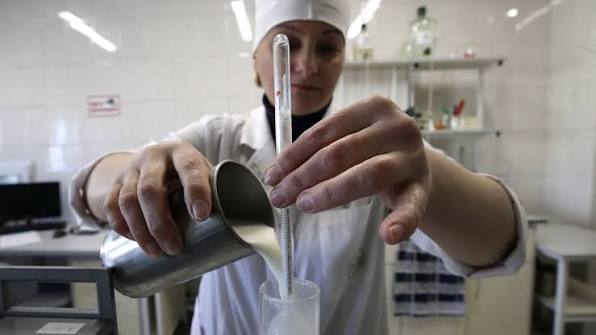
Its discussion of milk handling calls for consistent hygiene in both mechanised and traditional milking operations. Drawing off the first streams of milk and applying antiseptic teat treatment before milking are described as measures against environmental mastitis and elevated somatic-cell counts. After milking, it recommends rapid, continuous cooling in insulated stainless-steel tanks to 4°C to stabilise titratable acidity before collection. At the processing stage, it describes continuous pasteurisation above 72°C, or ultra-high-temperature treatment at 138°C for four seconds followed by aseptic filling in multilayer packaging.
Chihuahua is identified as one of Mexico’s leading states for primary milk production. The retail-market discussion distinguishes cow’s milk from mixed dairy preparations and imitation products formulated with imported dried whey, modified starches and hydrogenated palm-based vegetable fats. According to the article, these lower-priced imitations are marketed as genuine dairy products despite lacking the nutritional profile and minimum protein contribution specified in Mexican standard NOM-155-SCFI-2012. It also discusses the supply of domestically produced liquid milk to established pasteurising and cheesemaking plants in the region.
The account recommends coordination between municipal rural-development departments, the Secretaría de Agricultura y Desarrollo Rural (SADER) and local livestock associations. Its proposed accompanying measures include veterinary technical assistance, surveillance for brucellosis and bovine tuberculosis, and continued maintenance of rural roads used by refrigerated milk-collection tankers.