Girolando Cattle Behaviour Should Shape Farm Design
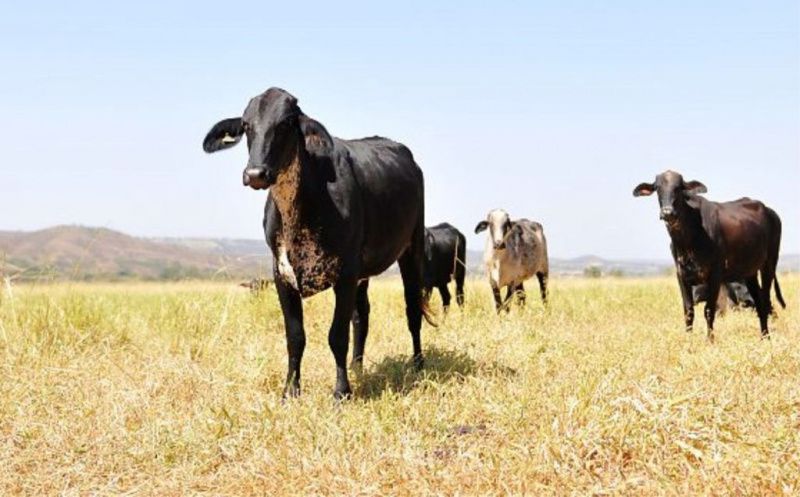
Girolando cattle combine the tropical adaptation and hardiness of the Gir Leiteiro zebu breed with the dairy capacity of Holstein cattle. Their temperament is not uniform: it can differ according to genetic composition, age and previous handling experiences, according to Vanessa Amorim, a veterinary doctor and agro-management and strategy analyst at Belgo Arames.
Amorim said farmers should monitor where animals move, where they gather and which situations cause agitation. Girolando cattle are generally social animals and may become uncomfortable when separated. They also learn repeated routes and schedules for feeding, resting and milking, while sudden changes can lead to resistance and increased movement. Social ranking may produce disputes near troughs, water points, gates and narrow passages.
Specific groups require additional attention. Cows in heat may move more and place greater pressure on fences when attempting to mount other females. Recently calved cows can behave protectively towards their calves. Animals with a higher proportion of zebu genetics may keep a wider flight zone when they have had little contact with people. Those accustomed from a young age to calm and regular handling generally respond better to being guided.
The physical setting also affects how the herd reacts. Narrow corridors, slippery surfaces, heavy mud, obstacles, dark areas and poorly positioned gates can cause cattle to stop, retreat or crowd together. Insufficient shade, water and suitable resting areas can concentrate animals at particular points of the farm, increasing pressure on fences and other containment structures.
Fencing is therefore used to organise animal movement and divide areas according to the farm’s routine. Its design should take account of the required strength, the animals’ category and size, the temperament of the group, the frequency of movement, the terrain and the purpose of each section. “A well-planned fence helps direct the animals’ movement and organise spaces according to the herd’s needs,” Amorim said. She added that boundaries, corridors, handling areas and pasture subdivisions face different levels of pressure and should be assessed separately.
Among the products recommended by Amorim is Belgo Z-700 oval smooth wire, intended for fences on flat or regular terrain, including dairy farms. It has a breaking load of 700 kgf, as well as elasticity and impact resistance. Belgo Eletrix is designed for electric fences and can be used for pasture subdivisions and rotational-management systems. Ratchets, insulators, staples, wire stretchers and posts can also be added to make installations safer, more stable and more durable.
“The fence must be more than a physical barrier. It should be part of an integrated system that considers herd behaviour, management and the farm’s structure,” Amorim said. Belgo Arames has operated for more than 50 years and is a Brazilian leader in steel-wire processing. It was created through a strategic partnership in Brazil between ArcelorMittal and Bekaert, has eight units in the country and is headquartered in Contagem, Minas Gerais.