Feed Monitoring Extends Beyond Formulation to Cut Waste
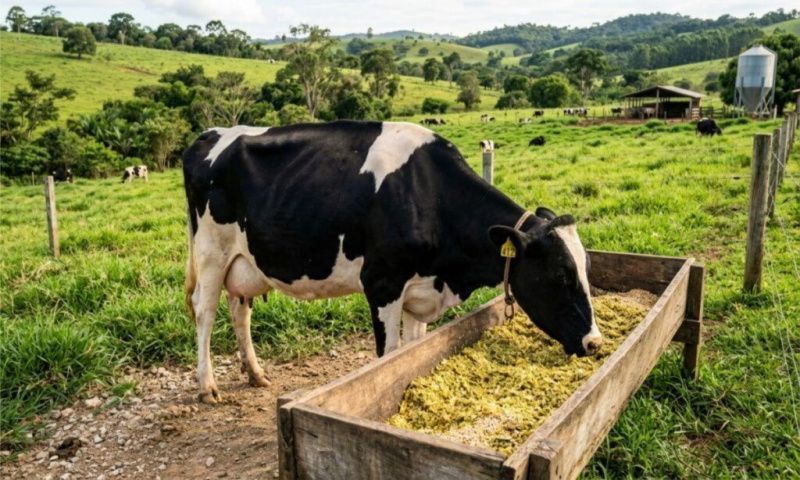
Checking the ration at several points along the feed line can reveal differences in its composition and physical structure. Samples are taken from the start, centre and end of the bunk, then compared to determine whether the mixture remains consistent across the areas where it is offered.
The laboratory stage goes beyond visual inspection. Collected portions are combined, mixed and reduced to obtain a representative sample for bromatological testing. The analysis covers elements including protein, starch and fibre characteristics, which are assessed against the values used in the original ration formulation.
Where the delivered feed differs from the planned composition, the ration may be left unchanged or revised. Adjustments can involve raising, lowering or replacing ingredients, depending on the animals’ requirements and the conditions on the farm. Mateus Elias Santinon Bertoti, an animal-nutrition specialist at Cocari, said that reducing one component can sometimes produce a better result than adding another. The objective is to balance nutrition, production, performance and efficiency.
Monitoring also continues after the cows have eaten. Examination of the manure can show how the feed was utilised. Visible maize particles, fibres and other components may provide information about ingredient processing, the make-up of the ration or its digestibility.
This approach connects three stages of the feeding process: what was formulated, what was actually delivered and how the herd used it. It therefore examines the diet’s full path through the farm rather than focusing only on the ingredient list or the planned quantities.
The appropriate changes depend on each farm’s available feed, costs, infrastructure and production objectives. A more uniform mixture, a nutritional profile consistent with the formulation and better utilisation of the feed may help reduce waste and improve the efficiency of milk production. The monitoring process is intended to establish whether the planned ration reaches the animals as specified and what happens to it after consumption.