Dairy supply chains: integrating packaging, warehouse automation and temperature monitoring
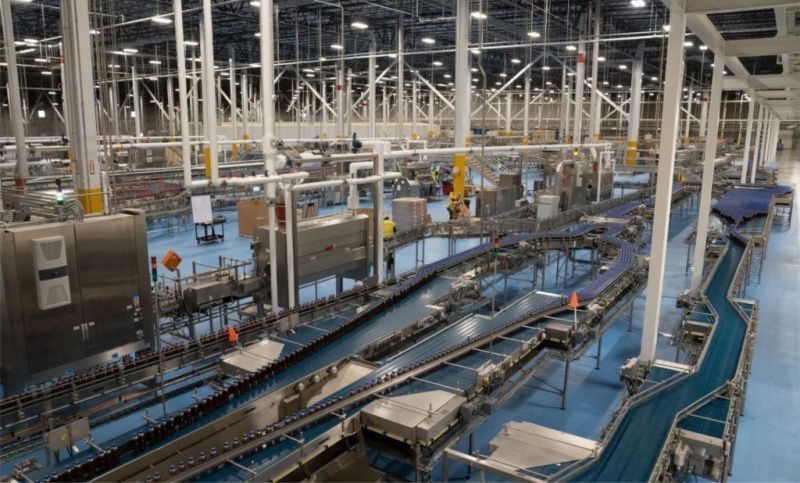
Packaging integration should begin during conceptual design and continue through start-up, according to Dennis Group, an architecture, engineering and construction provider based in Springfield, Massachusetts, operating since 1987. The company says treating packaging as a late equipment purchase can leave manufacturers with mismatched line speeds, constrained machinery and conflicts involving warehouses and utilities during construction. Its approach links primary and secondary packaging, palletising, processing and storage so that conveyor arrangements, automation and line layouts inform building design and implementation. Properly positioned accumulation zones provide temporary bottle storage between filling, labelling and packing, allowing downstream stoppages without halting upstream equipment. Dennis Group says coordinated engineering can improve overall equipment effectiveness and flexibility, reduce bottlenecks and change-order risks, and accommodate subsequent changes in products or demand.
Michael Lennard, who leads warehouse and logistics consulting at Milwaukee-based Rockwell Automation, says businesses need inventory, material-movement and warehouse information within their wider view of the product journey. Increasingly complex automation requires orchestration beyond traditional enterprise resource planning and warehouse-management systems, he says. A warehouse-management system provides real-time inventory visibility; a warehouse-execution system coordinates and optimises operations; and a warehouse-control system directs conveyors, autonomous mobile robots and storage equipment. Together, these applications can coordinate machinery, people, orders and workflows. Automated storage and retrieval systems can also increase the quantity held within a building. Kevin Lawton, founder and host of The New Warehouse podcast since 2019, says better use of cubic space can extend a company's occupation of a facility, particularly in temperature-controlled buildings that are more expensive to develop. Storage systems with separate temperature zones can accommodate both chilled and ambient products.
According to MarketsandMarkets, based in Delray Beach, Florida, the cold-chain market is estimated at $276.5bn in 2026 and forecast to reach $455bn in 2031, representing compound annual growth of 10.5%. Lennard says automation can limit employees' exposure to cold environments and help manage energy expenditure. Denser storage reduces the air volume requiring refrigeration; automated refrigerated facilities can use overhead cranes, conveyor technology and mobile robots to increase density and shorten turnaround times. Bryanne Macombe, supply-chain management lead at JPG Resources in Battle Creek, Michigan, describes a shift over the past five to ten years towards more continuous temperature monitoring, high-density automated frozen storage and multi-temperature warehouses. Monitoring provides visibility into temperature excursions, door openings, refrigeration performance and product movement. JPG Resources also selects and manages third-party logistics providers and connects procurement, production, demand planning, inventory management and logistics.
Macombe says dairy cold chains require documented temperatures tailored to each product throughout production and delivery, because even brief deviations can affect safety, shelf life and quality. Pasteurised milk generally needs to remain at or below 7°C, with operations commonly targeting about 2°C to 3°C. Ice cream typically requires temperatures between -23°C and -29°C. Lawton says AI could help supply-chain teams anticipate temperature risks and assess packaging conditions beyond those a person can consider simultaneously. For e-commerce shipments, this could help determine quantities of insulation, ice packs or dry ice. He also points to more robust sensors being developed to identify when products leave their required temperature range. Macombe says predictive analysis could combine readings from refrigeration equipment, shipments and temperature sensors to identify potential equipment failures or transport-related temperature problems before they occur.
Craig Shaum, chief operating officer of Red Stag LLC, says dairy transport must be coordinated with collection, processing, receiving and cleaning schedules. A farm delay can disrupt the next collection, a processing-site delay can affect several vehicles and drivers, and a late tanker wash can alter the following day's schedule. The food-grade bulk and dairy carrier, based in Cresson, Texas, uses GPS, electronic logging devices, dispatch software and real-time communications to manage these interactions. Shaum has worked there since its establishment in 2014; he recalls running an entire logistics business with a spreadsheet and triplicate forms when he entered the industry in 2009. For raw organic milk, Red Stag aims to maintain 0°C to 7°C during transport in insulated stainless-steel tankers after cooling at the farm. The vessels preserve the temperature of previously chilled milk. Customers sometimes use tankers for temporary storage during severe weather or plant shutdowns, when fleet and temperature tracking help guide decisions. Receiving-capacity information also helps the carrier allocate vehicles.
On the processing side, Todd Gilliam, Rockwell's Americas industry lead for consumer packaged goods, says model predictive control can combine AI with closed-loop control to help evaporators and spray dryers reach target conditions more quickly and consistently. Automation and AI can support product consistency, reduce waste and lessen reliance on expertise lost when experienced leaders retire. Gilliam says modular, scalable equipment and flexible conveying can also speed changes between stock-keeping units, portion sizes and packaging formats. He recommends a standardised, expandable technology base that allows processors to add capabilities as requirements change. In his assessment, AI applications need structured, contextualised information available across processing facilities, warehouses and other supply-chain operations. He says that foundation will become more important as companies deploy networks of AI agents.
Lennard recommends using simulation and emulation before committing to substantial capital expenditure. Digital twins can represent individual systems and processes or complete warehouses and processing facilities, allowing operators to model new installations or upgrades and compare operating scenarios before equipment installation or construction. Macombe says virtual facility models can similarly test changes to production, warehouse flows and refrigeration capacity before physical investment. Shaum emphasises the limited time available to collect, move and process milk after production, and the scheduling consequences of a late vehicle for farms, drivers, subsequent collections and processors. He identifies punctual collection, temperature control, hygiene and safe delivery as central requirements for bulk dairy transport.