Dairy Plants Can Reduce Fuel Consumption Without Switching to Alternative Energy Sources
Dairy processing plants can reduce fuel consumption and associated emissions by optimizing their steam systems—even before electrifying their boiler rooms or switching to hydrogen, biogas, and other low-carbon energy sources. This was stated by Joshua Townsend, Applications Engineering Supervisor at Miura America.
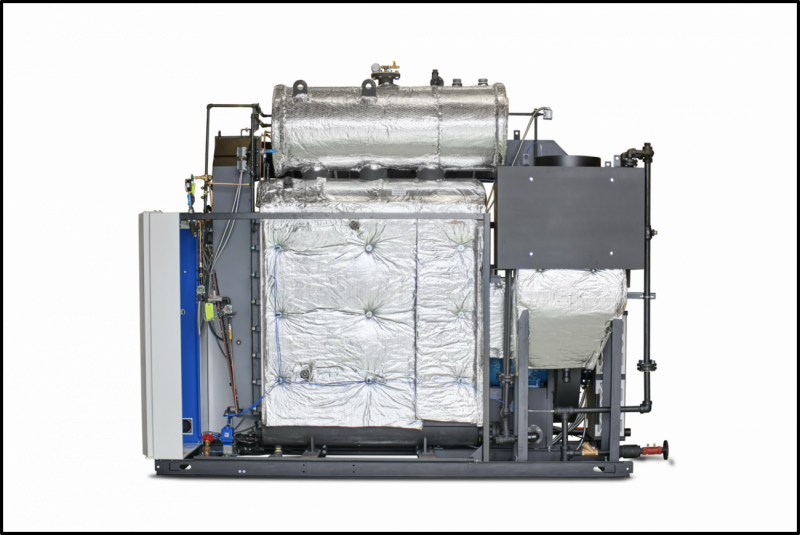
Steam is used at dairy plants for pasteurization and ultra-high-temperature processing, CIP cleaning, water heating, and other production processes. When a boiler room operates inefficiently, the consequences are reflected not only in fuel consumption but also in operating costs, emissions, and equipment service life.
The main sources of losses include heat discharged with flue gases, excessive boiler blowdown, and standby losses. Some of the heat contained in flue gases can be recovered using economizers and used to preheat boiler feedwater or support other low-temperature processes.
Additional losses occur through excessive blowdown, which may be linked to insufficient water quality control. Along with hot boiler water, the plant loses the energy already used to heat it, as well as chemically treated water.
Water treatment affects not only equipment reliability but also its energy efficiency. Scale formation impairs heat transfer, forcing the boiler to consume more fuel to produce the same volume of steam. Deposits can also cause localized overheating and damage to boiler tubes.
Continuous monitoring of water chemistry, the appropriate selection of treatment chemicals, and the use of additional water treatment technologies, including reverse osmosis, can reduce the required blowdown rate. However, the specific configuration should be determined based on the quality of the incoming water and the plant’s operating requirements.
Another way to achieve savings is to align steam production with actual demand. At dairy plants, steam loads may vary significantly depending on the production schedule, cleaning cycles, and the operation of individual processing lines. Excess installed capacity and the prolonged operation of boilers in standby mode result in additional fuel consumption.
Using several smaller boilers makes it possible to bring units online or take them offline in stages, depending on current steam demand. Such a configuration may be effective at plants with variable loads, although its suitability depends on the production schedule, redundancy requirements, fuel costs, and the parameters of the existing system.
Improving boiler room efficiency requires data on gas and water consumption, steam production, load profiles, blowdown, and flue gas performance. Automated monitoring helps identify deviations, adjust boiler sequencing, and assess the impact of water treatment on resource consumption.
Before upgrading its boiler room, a plant should establish an energy consumption baseline, compare installed capacity with actual demand, and identify periods when the greatest losses occur. Such an audit makes it possible to assess the potential for heat recovery, blowdown optimization, operating-mode adjustments, and control-system modernization.
According to Townsend, reducing losses in the existing steam system can become the first stage of a plant’s decarbonization strategy. Optimizing water treatment, recovering heat, matching capacity to actual demand, and implementing continuous monitoring can reduce fuel consumption in an operating boiler room without waiting for a transition to another energy source.
The specific economic effect of these measures depends on the equipment configuration and the plant’s operating conditions. Miura America’s original material does not provide quantitative data on fuel savings, emissions reductions, or payback periods.