Dália Delegation Examined Robots and Genetics at Agroleite 2026
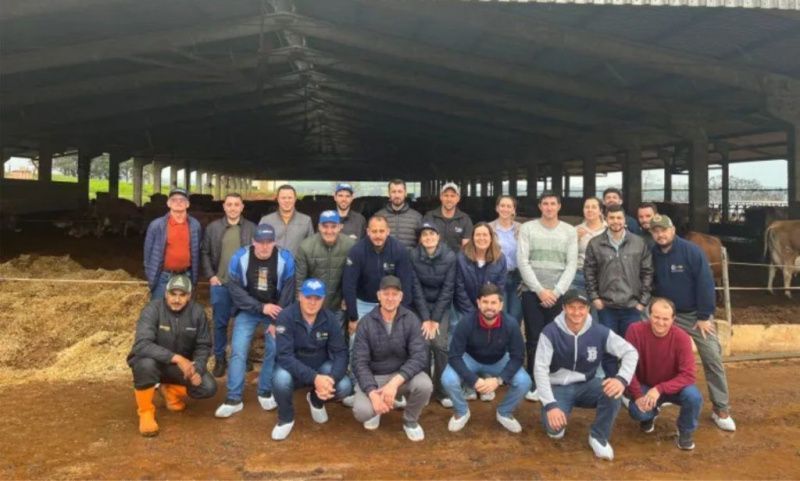
A delegation from Cooperativa Dália Alimentos spent several days at Agroleite 2026, a major Latin American dairy-farming exhibition held in Castro and Carambeí, Paraná. The group comprised 13 employees from the cooperative’s dairy-cattle technical team and agricultural stores, together with 12 members of the cooperative.
The visit took place in August and was financed by partner companies Elanco Saúde Animal and Cargill/Nutron. At the exhibition, the delegation reviewed stands from genetics companies and attended demonstrations of machinery, equipment and technologies used in dairy production. Its schedule also included visits to medicine laboratories and animal-nutrition businesses.
On August 5, the group visited two dairy farms in the area. Veterinarian Luciano Martins Redu described Castro and Carambeí as among Brazil’s leading milk-producing regions. “The region that hosts Agroleite is highly productive in the dairy segment, and it was therefore an important experience for both the technical team and the members,” he said.
The first farm, Fazenda São Thomé, uses a confined system and keeps about 550 Holstein cattle. Redu said the operation was roughly ten times larger than many farms served by Dália, while still being regarded as relatively small by local standards. He called it a case close to the type of operation with which the cooperative works.
The afternoon visit was to a Jersey farm using a hybrid milking system. Four robots milk part of the herd, including the highest-producing animals. Their average output was reported at 33 litres per animal per day. Lectures at the exhibition covered genetics, herd management and new production processes.
Agronomist Letícia Conzatti Piccinini said Agroleite is one of Brazil’s largest dairy-focused fairs and brings together major suppliers of inputs and support services. Associate Neidir Rigo, from Fagundes Varela, said the technologies he observed could support young people’s continued involvement in farming. He also linked rural attractiveness to quality of life and opportunities for growth, and said he had reflected on whether his own farm could encourage his children to continue in dairy production.