Barb O’Brien Steps Down After 25 Years at Dairy Management Inc.
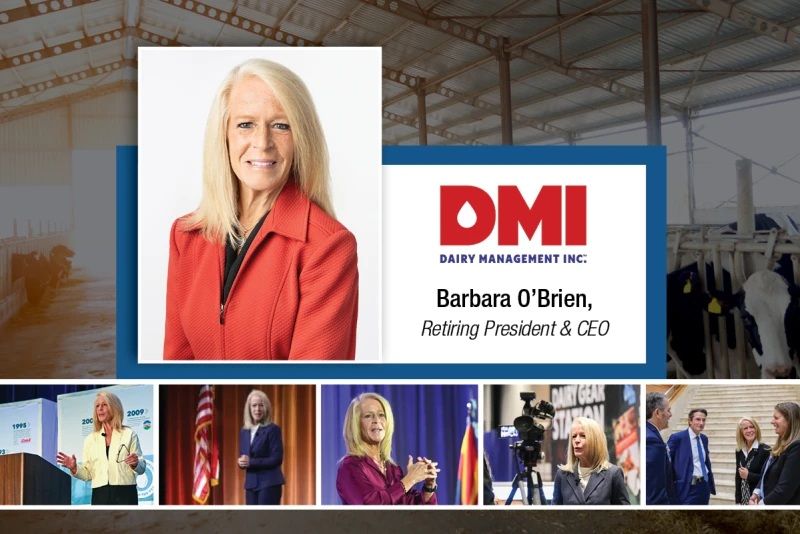
O’Brien’s departure was announced at Dairy Management Inc.’s annual meeting in Orlando, Florida. Board leaders described the change as the conclusion of a period in which the dairy checkoff adjusted its operations amid economic volatility, higher commercial input costs and changing consumer preferences.
During O’Brien’s tenure, DMI introduced the ASPIRE framework to apply standard measures to producer-funded programmes and identify investments with the strongest returns. The organisation also ended several older campaigns that it considered low-yielding. In nutrition science, its work included partnerships with institutions such as the Mayo Clinic and the launch of the Milk Molecule Initiative, which examined the metabolic effects of components in milk.
DMI said this research contributed to greater acceptance of full-fat dairy and supported the return of whole and reduced-fat milk to public-school lunch programmes. The organisation also backed ultrafiltration and extended-shelf-life processing. Fairlife became a major example of that commercial development, while value-added milk products reached 17% of total fluid-milk sales.
Internationally, DMI and the U.S. Dairy Export Council expanded sales channels as American milk-solids production grew. Domestic dairy demand increased by 9% over the five years covered in the report, while overseas shipments rose faster than those of any other major dairy competitor. US dairy-export revenue reached $9.6bn in 2025, with record levels reported for cheese, anhydrous milkfat and high-protein whey products. About 18% of US milk production now enters international markets, with Latin America and south-east Asia among the regions where commercial relationships were developed.
The checkoff also favoured joint investment with food companies over broad advertising campaigns. Partnerships with Domino’s and Taco Bell placed dairy ingredients more prominently in restaurant menus. Further work with coffee chains, speciality-beverage businesses and industrial bakeries involved milk, fresh cream, cold foams and functional dairy proteins. DMI participated in product development and consumer testing in corporate kitchens, while the arrangements created demand for butterfat and cheese blocks without requiring the checkoff to own processing assets.
O’Brien’s final years also coincided with pressure on dairy farms from feed-grain, diesel and fertiliser costs, as well as industry consolidation. The organisation said its focus on domestic foodservice applications and export routes was intended to support component premiums in farm milk payments. Scott will lead DMI as it moves into 2027, following the transition from O’Brien’s 25 years with the organisation.