A Tipperary Dairy Farm Cuts Electricity Costs with Solar
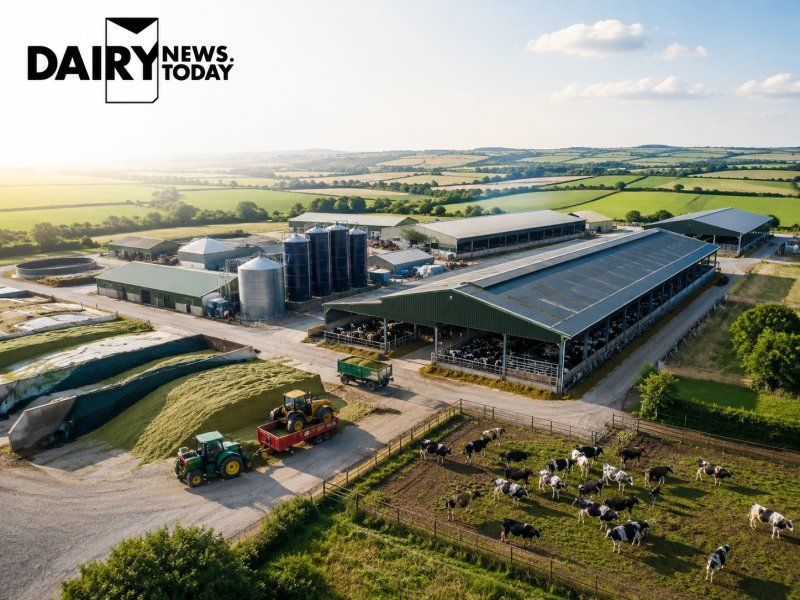
A dairy farm near Holycross, County Tipperary, has installed a solar-and-battery system to supply the electricity used for milking, water heating and milk cooling. The farm keeps 110 cows and previously paid about €2,500 on a two-month billing cycle. Its latest bill was approximately €500.
The farmer said those activities run every day regardless of electricity prices. The new equipment now supplies most of the farm’s demand, while the electricity still bought from the grid is mainly purchased during cheaper night-rate periods.
Electricity costs and dairy incomes
Electricity has become part of wider cost pressure in Ireland’s dairy sector. Teagasc forecasts that average dairy-farm income will decrease by 49% in 2026 to about €78,000, as milk prices fall and input costs increase. The Central Statistics Office reported that wholesale electricity prices in August 2026 were 76.9% above their level a year earlier.
Suppliers have also raised prices. Bord Gáis Energy increased its electricity unit rate by 9.1% from October 9, after SSE Airtricity announced an increase several days earlier. Teagasc estimates that milk cooling, water heating and milking equipment account for about three-quarters of a dairy farm’s electricity use.
System design and daily operation
ProSolar, an SEAI-registered installer that forms part of a family energy-technology business established 30 years ago, designed the installation around the farm’s consumption pattern. The system uses a Sigenergy SigenStor unit with 15kW of single-phase inverter capacity, a 45kWh battery and 59 solar panels. The panels cover 29.8kWp and are mounted on the roof of a corrugated-metal shed.
The farm milks twice a day, creating demand peaks at about 8am and 6pm, with relatively little consumption between them. The battery charges overnight using the night tariff, then supplies the morning milking and milk cooling when the daytime rate begins. Solar generation replenishes the battery during the middle of the day. Electricity that is not used on site is exported and paid for by the supplier.
On one autumn day, the farm used 110kWh and purchased only 2.9kWh at the daytime rate. After income from exported electricity, the day’s bill was about €9.92, compared with an estimated €34.42 without the solar installation. The difference was approximately €24.50 for that day. Across the year, ProSolar says the system saves more than one cent for each litre of milk produced.
Generation, grants and payback
The installation was switched on on June 16. By the time of the report it had generated about 12,000 units of electricity, 16% more than projected, and the battery had supplied 5,660kWh, mainly during the early-morning and evening milking periods. ProSolar estimates that the farm would use about 35% of its solar generation on site without storage; with the battery, the share has reached 76%.
The system tracks the source of the farm’s electricity every five minutes, and ProSolar has used the data to identify the largest loads. Ronan O’Connor, an agricultural solar consultant at the company, said that dairy farmers cannot control milk prices or the weather but can manage electricity use with solar photovoltaic equipment and a correctly sized battery.
ProSolar estimates a payback period of three years or less after grants, while the system is designed to operate for 20 years. The SEAI Non-Domestic Microgen Grant was doubled for applications submitted between October 6, 2026, and July 6, 2027. The company said the programme now provides funding comparable with the TAMS 3 Solar grant and uses direct applications without a ranking process. Eligible equipment can also qualify for full first-year deductions under Accelerated Capital Allowances.
Costs and savings depend on farm size, electricity consumption, site layout and system design. Solar generation is lower in winter, so ProSolar assesses farms individually before specifying equipment and funding options.