Washington Allocates $13.8 Million for Sustainable Dairy Digesters
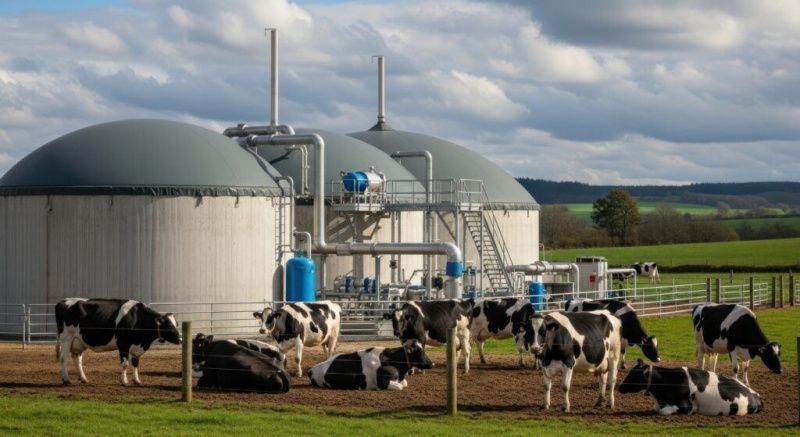
The Washington State Department of Commerce has announced an investment of $13.8 million in seven projects across five mostly rural counties, including one tribal community, to enhance sustainable dairy management. This funding, part of the Dairy Digester Program, aims to build, repair, and upgrade systems that capture methane from dairy manure and organic waste.
Anaerobic digesters, which transform manure and food waste into usable energy, play a crucial role in addressing environmental challenges in Washington, where nearly 250,000 cow and goat milk animals reside. These systems not only reduce greenhouse gas emissions but also improve wastewater management and generate renewable energy and nutrient-rich fertilizer, providing environmental and economic benefits.
Sarah Clifthorne, interim director of the Department of Commerce, emphasized the dual benefits of these projects, stating, "These dairy projects cut emissions and boost the resiliency of rural communities." Over the next decade, these initiatives are projected to reduce greenhouse gas emissions by over 1 million metric tons of carbon dioxide and capture more than 7,400 tons of waste runoff.
The projects include a $2.53 million anaerobic digester construction in Franklin County by 5D RNG LLC and a $4.65 million upgrade of existing digester facilities by the Tulalip Tribes of Washington in Snohomish County. Other projects involve upgrading outdated systems, constructing new digesters, and implementing nutrient recovery technologies.
Funding for these projects was sourced from the Climate Commitment Act (CCA) capital funding and the Clean Energy Fund. An additional $9.7 million has been allocated for future dairy digester projects in the 2026 supplemental budget.
The program also benefited from community feedback through a Request for Information and public listening sessions, shaping its focus on cost-effective methods like cover-and-flare projects that are suitable for smaller dairies. These projects are aligned with Washington’s agricultural conditions and aim to minimize transportation impacts.
Additionally, $500,000 has been appropriated to the Washington State University Energy Program to provide technical expertise and support to these projects. This investment is expected to enhance the long-term sustainability of on-farm digesters and connect producers with necessary research and resources.