
Kazakhstan Introduces New Dairy Camel Breed
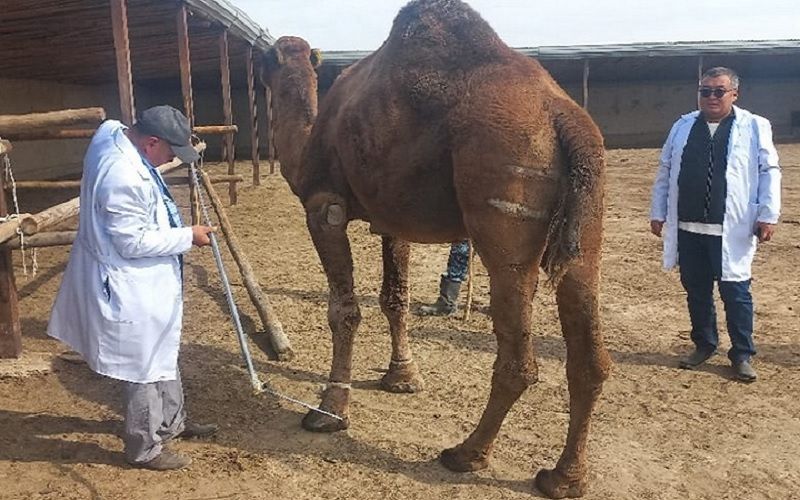
According to the National Agrarian Science and Education Center (NASEC), research began in the late 1990s. The breeders aimed to create a purely dairy type of camels through the strict selection of high-yielding female camels and their crossbreeding with elite male producers. The main work was carried out at the Usenov N farm in the Otrar district of the Turkestan region.
The new type belongs to dromedaries (one-humped camels) and shows significantly higher performance compared to the national averages.
-
The average milk yield for the first 12 months of lactation exceeds 2 tons.
-
The best individuals produce over 2.6 tons.
-
The national average in Kazakhstan is no more than 1.5 tons per head.
-
The milk fat content is 3.8–4.1%, which is above standard values.
The milk obtained is used as raw material for the production of saumal and shubat, with products targeted not only at the domestic market but also for export.
In addition to milk productivity, the new type is characterized by a stable yield of wool and down, and the young camels actively accumulate fat, which increases the animals' overall economic value.
"The government is working on the development of the livestock sector, including camel breeding, increasing the livestock population, providing state support measures, and effectively marketing products. To stimulate this sector, state support measures have been provided within the framework of the Rules for subsidizing the development of breeding livestock, increasing productivity and quality of livestock products. These include subsidizing the purchase of breeding camels, obtaining subsidies to reduce the cost of production and processing of camel milk," said Olzhas Bektenov, head of the government of Kazakhstan.
The development has already attracted investor interest. According to the Bureau of National Statistics, camels are one of the few types of agricultural animals in Kazakhstan showing a steady increase in numbers.
Since the beginning of 2025:
-
The camel population has increased by 4.5% — to 300,000 heads,
-
horses — by 6.4%,
-
Cattle — by only 1.1%.
The government of Kazakhstan has announced its intention to pay special attention to the development of camel breeding.
Olzhas Bektenov announced the expansion of state support measures, including:
-
subsidizing the purchase of breeding camels,
-
reducing the cost of production and processing of camel milk,
-
increasing the subsidy for the purchase of young animals fr om 100,000 to 175,000 tenge,
-
raising the milk processing subsidy rate to 190 tenge per kilogram,
-
compensation of up to 50% of investment costs for pasture irrigation (up to 80% in the Mangistau region).
Support for projects on the deep processing of saumal, including the production of dry milk and tablet forms, as well as the construction of sublimation plants with access to preferential financing at 2.5% per annum through SPC, was also announced.
"In arid regions wh ere camel breeding is traditionally developed, such as Mangistau, Atyrau, Kyzylorda, and Ulytau regions, a subsidy mechanism is also in place to reduce feed costs. The timing of applications for subsidies, criteria, and standards are approved by local akimats. This will ensure flexibility and prompt decision-making, taking into account the natural, climatic, and economic characteristics of the regions," said Olzhas Bektenov.
Authorities stress that camel breeding, despite its high potential, remains an industry with natural risks. In particular, in some regions, cases of animal deaths from poisonous insects are recorded. Compensation for such losses from the budget is not provided, and farmers are advised to consider epizootic and natural factors when organizing grazing.
Photo: inbusiness.kz