‘Cheesed off:’ demand for compo if EU deal is a dud
Source: DairyNews.today
Farmers and food producers will demand “significant compensation” if the Albanese government strikes an “unfair” trade deal with the EU, in a major hardening of their position.
Agricultural and food sectors believe the deal currently on the table in the free-trade agreement talks must be rejected unless it is dramatically improved. If it isn’t, they have flagged a push for federal compensation to offset the impact of a flood of subsidised EU product into the country, and the resulting loss of market share.
“Let’s be clear, the deal on the table is not free or fair for Australian dairy,” Australian Dairy Industry Council chair Ben Bennett told The Australian. “It asks our industry to take on more risk, more cost, and more imports, for next to nothing in return.
“The Australian dairy industry is going to be hung out to dry through a new EU-style geographical indications regime, restricted market access, and the removal of our most significant dairy import tariff: cheese.
“If dairy is asked to carry the cost of the agreement, the Australian industry needs proper support and significant compensation as part of the package.”
Trade Minister Don Farrell would not comment directly on whether the government would provide compensation to sectors adversely impacted by any FTA. However, he insisted it would not sign a deal without further EU concessions. “As I’ve consistently said, we will only do a deal if it’s in our national interest,” Senator Farrell told The Australian.
“The Europeans know that if they want a deal, we need a better offer. I don’t do bad deals.” Despite Senator Farrell’s reassurances, industry sources said Australia’s negotiators believed the EU would not make any further significant concessions, and sectors remain concerned a “dud deal” may result under political and diplomatic pressure. Anthony Albanese has expressed a desire to see a deal in weeks, while Europe wants to conclude talks in time for a flagged visit to Australia by EU President Ursula von der Leyen fr om February 15.
“The real concern is that the government will just do a deal to get this done and Australian agriculture will be compromised,” National Farmers’ Federation interim chief executive Su McCluskey told The Australian.
“It may be said to be ‘in Australia’s interest’ but may actually be to the detriment of Australian agriculture.” Farmers wanted the Albanese
government to “walk away”, as Australia did during similar talks in 2023, rather than accept less than significantly improved access for Australia’s dairy, red meat, sugar and rice exports.
“It will be really disappointing if we end up with a deal that is no better, or marginally better, than the one we walked away from last time,” Ms McCluskey said. Recently imposed Chinese tariffs on beef, and volatility around America’s trade policy, have added impetus to the EU talks, but Ms McCluskey said these developments made it “even more critical that we get a good deal”.
Concern is most acute in the $18.5bn dairy industry, which supports 70,000 jobs, largely in regional Australia. There is already a huge dairy trade imbalance, with about 25 per cent of dairy imports into Australia coming from Europe but negligible trade in the counter direction, due to EU quotas, tariffs and conditions.
EU dairy exports to Australia are worth $877m a year, while Australian dairy exporters send just $55m in product to Europe. Negotiators for the EU are demanding removal of Australia’s most significant remaining dairy import tariff – a $1.22 per kilo duty on cheese. Australia’s industry fears that would see a further flood of heavily subsidised EU cheese enter the country.
“Any Australia-EU FTA must include an enforceable safeguard mechanism for dairy so Australia can respond quickly if EU imports surge and damage local producers,” said dairy industry council deputy chair John Williams.
“The government must lock in binding, time-bound review mechanisms that assess impacts on dairy and trigger corrective action wh ere harm occurs. It must also pursue compensation gains elsewhere ... so dairy is not left carrying the cost of this deal.”
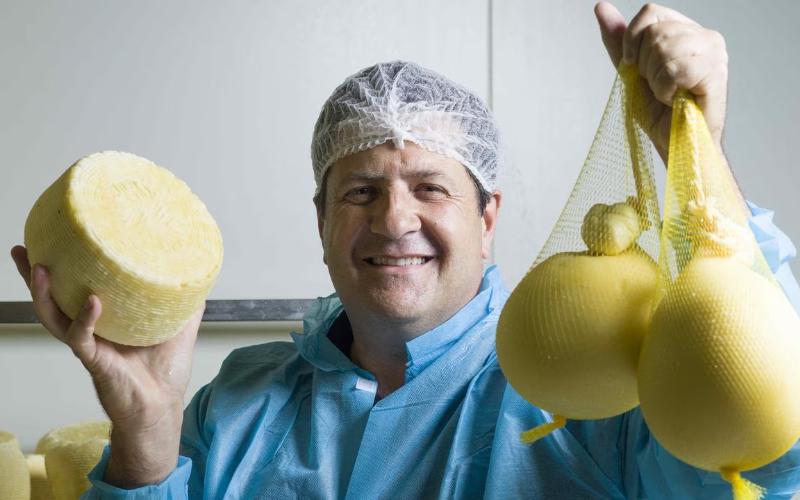
Europe is also demanding Australian producers stop using terms such as parmesan, feta and mozzarella, arguing these are geographically linked. Victorian cheesemaker Giorgio Linguanti, originally from Italy, said while some cheese names were genuinely place-specific, such as Parmigiano-Reggiano, the EU was out of order in seeking to ban generic descriptors. “The word parmesan doesn’t exist in Italy – if you go there and ask for parmesan nobody will understand,” he said. “So when you talk about Australian parmesan people know it’s not the Italian Parmigiano-Reggiano.
“We have every right to use generic names like mozzarella and parmesan. Europe doesn’t have the right to tell us not to.” He said Australian producers were already disadvantaged: “In Europe and America, farmers are subsidised so the product arrives here very cheap in comparison to the Australian product.”
Local producers fear the EU will introduce new subsidies for its farmers to win over local support for any trade deal, creating an even more “uneven playing field”. Ms McCluskey said the EU had brought forward $80bn in subsidies to secure member nation support for its recent trade deal with the Mercosur group of South American countries. It was feared the EU would do the same with any Australia FTA.
“Are they going to come up with more subsidies to try and get this deal? Or, worse, is Australia just doing to accept a sub-par deal?” Ms McCluskey said. “We have got to keep pushing for a materially improved offer.”
“Let’s be clear, the deal on the table is not free or fair for Australian dairy,” Australian Dairy Industry Council chair Ben Bennett told The Australian. “It asks our industry to take on more risk, more cost, and more imports, for next to nothing in return.
“The Australian dairy industry is going to be hung out to dry through a new EU-style geographical indications regime, restricted market access, and the removal of our most significant dairy import tariff: cheese.
“If dairy is asked to carry the cost of the agreement, the Australian industry needs proper support and significant compensation as part of the package.”
Trade Minister Don Farrell would not comment directly on whether the government would provide compensation to sectors adversely impacted by any FTA. However, he insisted it would not sign a deal without further EU concessions. “As I’ve consistently said, we will only do a deal if it’s in our national interest,” Senator Farrell told The Australian.
“The Europeans know that if they want a deal, we need a better offer. I don’t do bad deals.” Despite Senator Farrell’s reassurances, industry sources said Australia’s negotiators believed the EU would not make any further significant concessions, and sectors remain concerned a “dud deal” may result under political and diplomatic pressure. Anthony Albanese has expressed a desire to see a deal in weeks, while Europe wants to conclude talks in time for a flagged visit to Australia by EU President Ursula von der Leyen fr om February 15.
“The real concern is that the government will just do a deal to get this done and Australian agriculture will be compromised,” National Farmers’ Federation interim chief executive Su McCluskey told The Australian.
“It may be said to be ‘in Australia’s interest’ but may actually be to the detriment of Australian agriculture.” Farmers wanted the Albanese
government to “walk away”, as Australia did during similar talks in 2023, rather than accept less than significantly improved access for Australia’s dairy, red meat, sugar and rice exports.
“It will be really disappointing if we end up with a deal that is no better, or marginally better, than the one we walked away from last time,” Ms McCluskey said. Recently imposed Chinese tariffs on beef, and volatility around America’s trade policy, have added impetus to the EU talks, but Ms McCluskey said these developments made it “even more critical that we get a good deal”.
Concern is most acute in the $18.5bn dairy industry, which supports 70,000 jobs, largely in regional Australia. There is already a huge dairy trade imbalance, with about 25 per cent of dairy imports into Australia coming from Europe but negligible trade in the counter direction, due to EU quotas, tariffs and conditions.
EU dairy exports to Australia are worth $877m a year, while Australian dairy exporters send just $55m in product to Europe. Negotiators for the EU are demanding removal of Australia’s most significant remaining dairy import tariff – a $1.22 per kilo duty on cheese. Australia’s industry fears that would see a further flood of heavily subsidised EU cheese enter the country.
“Any Australia-EU FTA must include an enforceable safeguard mechanism for dairy so Australia can respond quickly if EU imports surge and damage local producers,” said dairy industry council deputy chair John Williams.
“The government must lock in binding, time-bound review mechanisms that assess impacts on dairy and trigger corrective action wh ere harm occurs. It must also pursue compensation gains elsewhere ... so dairy is not left carrying the cost of this deal.”
Europe is also demanding Australian producers stop using terms such as parmesan, feta and mozzarella, arguing these are geographically linked. Victorian cheesemaker Giorgio Linguanti, originally from Italy, said while some cheese names were genuinely place-specific, such as Parmigiano-Reggiano, the EU was out of order in seeking to ban generic descriptors. “The word parmesan doesn’t exist in Italy – if you go there and ask for parmesan nobody will understand,” he said. “So when you talk about Australian parmesan people know it’s not the Italian Parmigiano-Reggiano.
“We have every right to use generic names like mozzarella and parmesan. Europe doesn’t have the right to tell us not to.” He said Australian producers were already disadvantaged: “In Europe and America, farmers are subsidised so the product arrives here very cheap in comparison to the Australian product.”
Local producers fear the EU will introduce new subsidies for its farmers to win over local support for any trade deal, creating an even more “uneven playing field”. Ms McCluskey said the EU had brought forward $80bn in subsidies to secure member nation support for its recent trade deal with the Mercosur group of South American countries. It was feared the EU would do the same with any Australia FTA.
“Are they going to come up with more subsidies to try and get this deal? Or, worse, is Australia just doing to accept a sub-par deal?” Ms McCluskey said. “We have got to keep pushing for a materially improved offer.”