The Wacherski farm has never used financing in Paraná
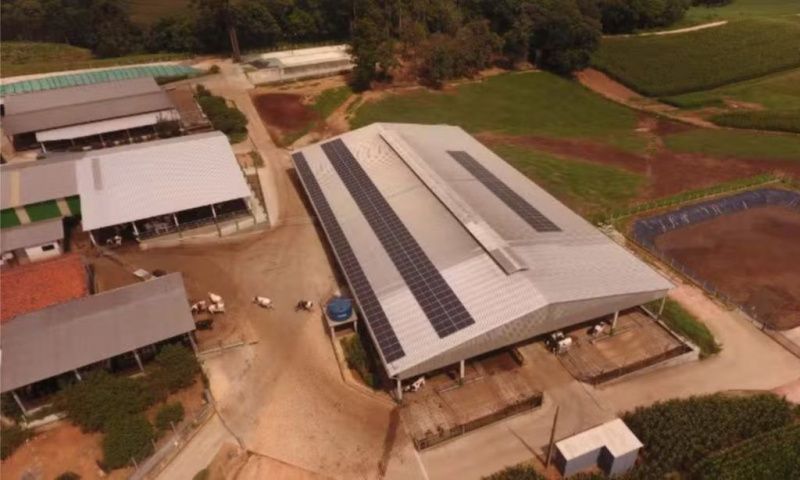
At Chácara Ressaca, each cow produces an average of 40 litres of milk a day. That exceeds the 30–35 litres per cow per day recorded by Embrapa Gado de Leite for farms using more capital-intensive systems. The farm’s somatic-cell count is 90,000 per millilitre, while its standard plate count is below 1,000 colony-forming units per millilitre. The figures are associated with bonuses paid by the dairy industry for herd health and milking quality.
The farm is part of Rota do Leite, an initiative that presents the region’s more efficient properties to visitors attending Agroleite, an annual fair organised by Cooperativa Castrolanda. Nationally, the number of farms engaged in dairy cattle production fell from 874,500 in 2006 to 634,500 in 2017, according to the Brazilian Institute of Geography and Statistics. Estimates from Embrapa’s Centre for Dairy Intelligence put the number at about 513,000 in 2025, a 41.3% decline over nearly two decades.
Production has risen among the farms that remain in the sector. Average output per cow increased from 1,105 litres a year in 2000 to 2,362 litres in 2024. Brazil’s total milk production grew from 19.7bn litres to 35.7bn litres over the same period, according to Municipal Livestock Survey data compiled by the Centre for Dairy Intelligence.
Glauco Carvalho, an economist and researcher at Embrapa Gado de Leite, said the current market favours producers who control costs and invest in technology. “They are the ones who have the greatest success in the activity. Those who do not carry out milk recording and do not invest in technology have difficulty remaining,” he said. Between 70% and 80% of Brazil’s dairy producers are classified as small, Carvalho added; this is also the group most affected by departures from the sector, although short-term estimates indicate that production could increase among these farms.
Christiano Nascif, director of consultancy Labor Rural, described the Wacherskis’ approach as conservative and said that not every producer could maintain it. With Brazil’s Selic interest rate at 14% a year, he said: “It is difficult for them to repay a loan at this rate.” Nascif identified medium-sized cattle farmers as the group at greatest risk because they have too much capital tied up to leave quickly, but lack both the technological structure of large operators and the family labour flexibility of small ones.
Nascif said financially sound herds should have at least 45 cows in milk for every 100 cows, compared with a Brazilian average of about 20%. He also said farms with assets worth between 3m and 10m reais should retain at least 10,000 reais in cash: “Economically, he is doing well, but financially he is doing badly.” Veterinarian Gilberto Foltran, an Elanco Animal Health consultant who works with the farm, also linked its health results to the region’s history of genetic improvement, whose first national programmes began in the Campos Gerais. The family plans to extend its free-stall system to heifers, pregnant cows and animals intended for insemination, continuing to use its own capital.