A study finds calcium-rich whey permeate maintains bone density
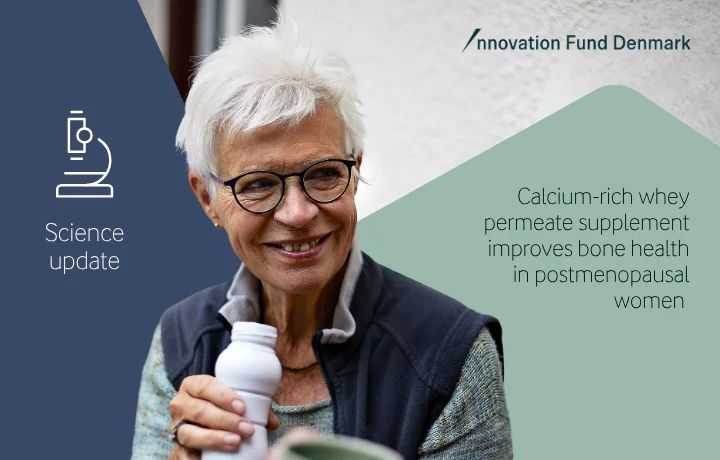
The RENEW project examined whether calcium-rich permeate generated during whey production could serve as a bioactive food ingredient for postmenopausal women. The intervention was conducted in Denmark by Zealand University Hospital and the University of Copenhagen, with funding from Innovation Fund Denmark.
Participants were randomly assigned to receive a placebo or 800mg of calcium per day. The calcium was supplied either as calcium carbonate or as calcium-rich whey permeate, taken on its own or with inulin, and divided between two daily doses. All participants also received vitamin D, a nutrient involved in maintaining normal bones.
A total of 316 postmenopausal women completed the 12-month study. Bone mineral density was preserved among the 78 women given the calcium-rich whey permeate intervention, while the 75 women in the placebo group experienced a decline over the same period.
Blood measurements related to bone turnover showed that the rate of bone loss had slowed by the third month among those receiving whey permeate. The addition of inulin did not produce an extra benefit for bone health in the trial.
The supplement contained Capolac, Arla Foods Ingredients’ calcium-rich milk-based ingredient, and Variolac, a lactose-based ingredient. Dr Simon Bøge Riis, a nutrition scientist at Arla Foods Ingredients, said that osteoporosis affects about one in five older adults globally and is particularly common among postmenopausal women and in Asia. He said the research showed that twice-daily whey permeate supplementation improved bone turnover markers and maintained bone mineral density in the study population.
The RENEW partnership includes Arla Foods Ingredients, Arla Foods amba, the University of Copenhagen, Zealand University Hospital, Aarhus University and the USDA Western Human Nutrition Research Center. Its work focuses on combining milk-derived calcium with lactose-rich whey permeate and the prebiotic fibre inulin; the project has proposed that prebiotics may support an intestinal environment that improves calcium absorption.
Arla Foods Ingredients is also developing a dried-fruit bar containing 265mg of calcium in a 10g serving, the amount described as equivalent to a glass of milk. The proposed format is intended for consumption on the go and can be adapted to regional flavour preferences. It incorporates approaches designed to reduce fruit waste while using a whey-permeate side stream. Bøge Riis said affordable calcium-rich milk-based ingredients could be relevant in developing countries, where calcium deficiency is an overlooked problem, and could be included in products addressing more than one nutritional deficiency.