Wisconsin dairy farmer: rising input costs outpace USDA milk prices
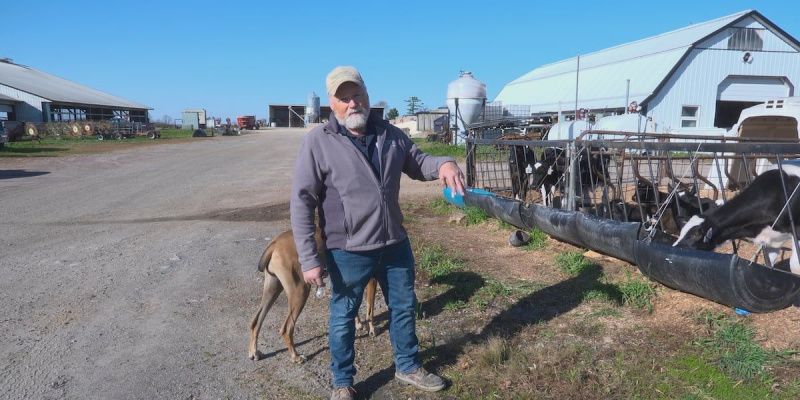
The November base Class I milk price rose to $20.27, but Breitenmoser said USDA-set prices were insufficient to cover his costs. The monthly price fluctuates, and he said current levels resembled those he had received early in his career. He described dairy farming as a business that sells its output at wholesale prices while purchasing supplies at retail prices. Diesel reached record prices in September, following increases that came first with the war in Ukraine and subsequently with the war in Iran.
Darin Von Ruden, president of the Wisconsin Farmers Union, distinguished the current difficulties from weather-related disasters. Farmers could cope with floods, tornadoes and hurricanes, he said, but he regarded the present problem as human-made and twice as severe. He urged participation on Election Day, saying voters should choose representatives committed to maintaining a safe food supply.
Von Ruden said support for agriculture should cross party lines and that work on the farm bill should begin in the U.S. Senate. Farmers were awaiting congressional passage of an updated bill, he said. He described a process that had once regularly secured bipartisan agreement but had become subject to annual disputes. In his account, the legislation should have passed in 2023, and the existing farm bill had expired.
USDA figures from 2016 showed that profitability was more common among larger farms. Breitenmoser’s herd of 460 cows placed his operation in the middle size range. Among farms of that size, 30% recorded a profit, while two-thirds generated enough income to support a living and continue into the following year. Farmers facing tighter cash flows have sold their herds and exited the industry. U.S. court records showed that 11 Wisconsin farms sought Chapter 12 bankruptcy protection between September 2025 and September 2026.
Breitenmoser’s parents moved from Switzerland and established the family’s farm in Lincoln County decades ago. He was born in 1969 and said he had lived there throughout his life. His parents began with roughly 25 cows; the herd has since expanded to about 460. Over that period, he has witnessed changes both within the family operation and across the dairy industry.
On his own road, Breitenmoser said, the number of dairy farms had fallen from 13 to three. He linked that decline to changes in the local economy, pointing to a deteriorating church beside his property that had previously served an active congregation. Breitenmoser continues to operate his dairy farm.