Limerick dairy farmer cuts farm inputs through regenerative practices
Tom Stack began changing the system at his family farm in Ballyagran, Limerick, after taking it over in 2012. He moved to organic production in 2018, having become dissatisfied with conventional methods and seeking a farm that could withstand environmental and financial pressures. At a BioFarm conference that year, he learned about regenerative agriculture and Korean Natural Farming (KNF).
Stack said that in 2017 his veterinary bill was €7,500, while feed cost €26,000 and fertiliser cost €14,000. KNF uses bacteria, fungi and other microorganisms collected on the farm to support soil fertility without synthetic fertiliser, herbicides or pesticides. Stack gathers the organisms in rice-filled wooden boxes placed around the holding. After further processing, the resulting liquid, known as LIMO, contains nutrients and enzymes and is applied to fields and crops.
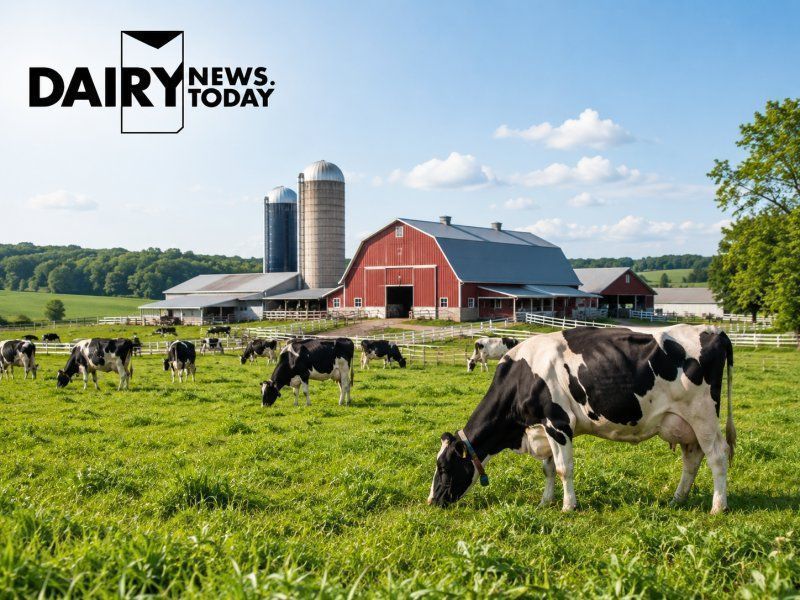
The 146-acre farm currently milks 65 cows and supplies its organic milk to Glenisk. Since adopting regenerative methods, Stack says feed costs have fallen by about 96%, with no purchased feed used for the herd. Fertiliser expenditure has dropped by roughly two-thirds; lime is now the only fertiliser applied. The cows are fed entirely on grass, and Stack makes nutritional supplements for them from natural inputs and processes.
The herd has not received antibiotics since 2017 and recorded no reactors in its latest bovine tuberculosis test. Stack places emphasis on developing the animals’ immunity. The farm normally carries between 93 and 114 cattle, with stocking density ranging from 1.3 to 1.5 livestock units per hectare. Annual production remains between 200,000 and 220,000 litres, or about 3,700 litres per cow, despite changes in the number of animals carried.
Stack also grows feed and materials for farm use. One hectare of arable ground can produce as much as 15 tonnes of a mixture of peas, oats, barley and buckwheat. Part of the crop is used for calf feed, while the remainder goes into organic sprays made under the KNF system. The absence of bought feed and synthetic nitrogen, phosphorus and potassium has reduced the farm’s cost base, according to the account.
Excluding subsidies, the farm’s gross margin per litre was between 40 and 58 cents from 2022 to 2025, compared with a national average of 30 to 39 cents. Its output per hectare is deliberately lower, leaving gross margin per hectare below the national average. To respond, Stack has chosen to process some of his milk on the farm rather than pursue higher-output genetics.
“Everyone has their own journey and there’s so many ways,” Stack said. “I think the first step is to be viable as farmers.” He also pointed to knowledge and education, adding that farmers should take a step towards being self-sufficient. Stack was among Irish regenerative farmers who recently hosted farm walks with the European Alliance for Regenerative Agriculture (EARA). An EARA report on Ireland said rising input costs, bovine tuberculosis, water pollution and the decline in young farmers had “shared systemic roots”. It described a transition to regenerative agriculture as “achievable and economically viable”.