Artisanal Cheese Helps Small Dairy Farmers Stay in Business
In Rio Grande do Sul, artisanal cheese has become one route for dairy farmers seeking to continue operating as milk prices fluctuate and production costs remain high. Data from the Federation of Agriculture of Rio Grande do Sul (Farsul) show that more than 55,000 farmers left the sector between 2015 and 2025, a decline of 65%.
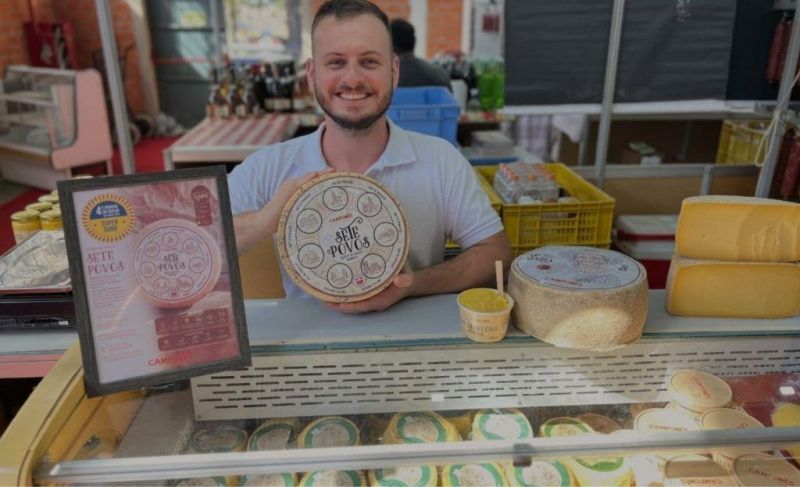
Igor Valsoler, a dairy farmer and cheesemaker from Jóia in the state’s north-west, won the fourth World Cheese Championship of Brazil. Over the past three years, the number of medals won by producers from Rio Grande do Sul in Brazil’s leading national cheese competition has risen from 30 to more than 100, including 30 gold awards. “Today we can say that we are on the rise,” Mr Valsoler said.
Mr Valsoler began producing milk with his parents in 2007. The family decided not to rely solely on selling raw milk to large dairy companies. He said they believed that working with industrial buyers could eventually become costly because companies pursue their own profits rather than those of suppliers. In his assessment, processing the milk themselves enabled the family to remain in the activity during periods of price instability and other economic difficulties.
Eloiza Debona, a farmer in Soledade in the north of the state, began making cheese in 2016 after a lorry drivers’ strike left about 500 litres of milk stranded on her property. A family recipe attracted consumers and led her and her husband to change the farm’s business. She now processes 95% of the milk produced there and won a gold medal at this year’s World Cheese Championship of Brazil. Ms Debona said cheese production helped the farm withstand drought, changes in milk prices and high costs without leaving dairy farming.
Aline Balbinoto, a specialist in milk and dairy products at Sebrae-RS, a small-business support agency, said the artisanal cheesemaking market had expanded in the state over the past five years. Sebrae-RS works with about 45 small cheese-processing businesses. Their products have been displayed at trade fairs in Paraná, Santa Catarina, Rio de Janeiro, São Paulo and Brasília, where, according to Daniel Cichelero, president of the Association of Colonial Cheese Producers of the Serra Gaúcha, they have attracted demand.
The association signed its founding document at this year’s Expointer agricultural fair. It is seeking geographical-indication status for colonial cheese from Serra Gaúcha, a process begun two years ago with support from Sebrae and the Organisation of Cooperatives of Rio Grande do Sul. The association is due to receive a microbiological analysis of milk produced in the region in November. Mr Cichelero said the area’s terrain limited the scale of milk production, while producers considered the milk distinctive for its quality and organoleptic characteristics. He said those attributes needed to be communicated to consumers.
The approach follows that of producers of queijo serrano, another traditional cheese from Rio Grande do Sul. The National Institute of Industrial Property granted it geographical-indication status in 2020, the first such designation in Brazil for an artisanal cheese. Allan Tormen, who co-ordinates Farsul’s milk and dairy-products commission, said artisanal cheese could add value without requiring small farmers to increase production volumes. Rio Grande do Sul is Brazil’s third-largest milk-producing state and accounts for 12.8% of national milk collection.
Mr Tormen said local rules for artisanal cheese production needed updating. He questioned how a small cheesemaker could meet the same infrastructure requirements as an industrial facility holding the federal SIF inspection seal. Ms Balbinoto estimated that establishing a cheese-processing unit cost at least R$35,000 and could run into millions of reais, depending on its size. The minimum figure was based on a container-based facility displayed at this year’s Expointer. She said a producer could begin with a smaller unit serving current demand before expanding.