Guatemala
Guatemala is a key player in the Central American dairy market, balancing local production with significant imports to meet domestic demand. The country produces approximately 465 million liters of milk annually and processes 300 million liters into various dairy products. Imports, mainly from the United States, surpass local production, highlighting growth opportunities. Recent initiatives focus on enhancing local production quality and safety through technological advancements and international collaborations.
Haiti
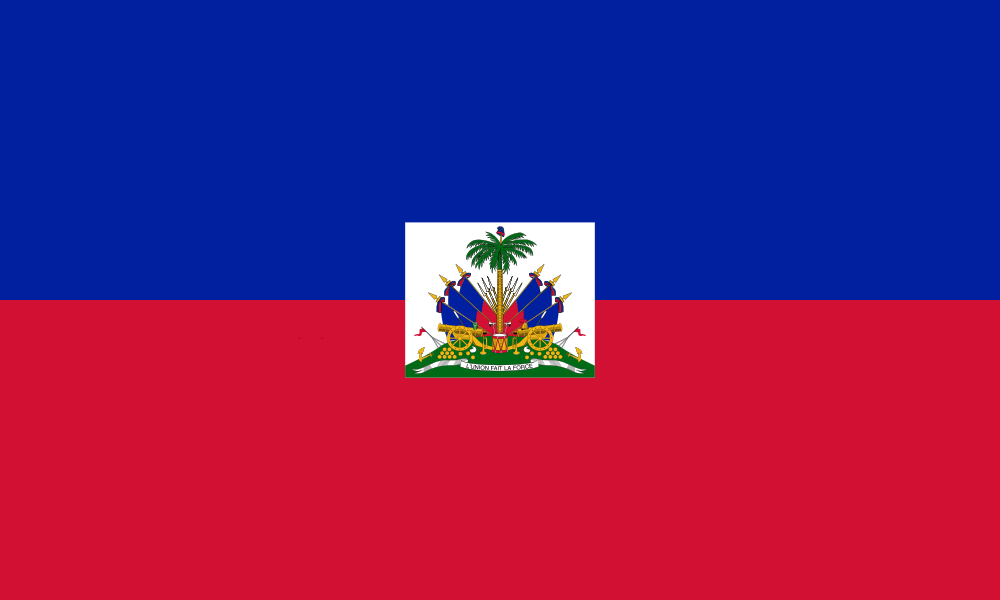
Haiti is a crucial market for Dominican dairy products, reflecting its significance in the regional dairy industry, particularly for exports from the Dominican Republic.
Honduras
Honduras, a key member of the Central American Free Trade Agreement (CAFTA), is experiencing growth in its dairy market. The country has around 580,000 dairy cattle, producing approximately 750 million liters of milk annually, with 260 million liters being processed. The dairy sector is bolstered by major companies like Lácteos de Honduras (LACTHOSA) and Productos Lácteos Sula, contributing to annual exports valued at $40 million. However, challenges such as regional production declines and high costs per liter affect the industry.
Hungary
Hungary's dairy industry is a vital component of its agricultural sector, facing challenges such as declining milk prices and disease outbreaks. Despite these issues, the industry has maintained its strength through innovation and expansion, supported by significant production and processing infrastructure.
Iceland
Iceland's dairy industry is a cornerstone of its agricultural economy, boasting advanced milk processing facilities and significant cheese production. Despite international trade challenges, the sector remains robust, focusing on sustainability and innovation.
India
India is a leading force in the global dairy industry, contributing significantly to milk production and trade. With a robust domestic market supported by major enterprises like Amul and Mother Dairy, India is experiencing transformative growth in dairy processing, sustainability, and international trade. Challenges such as rising production costs and climate impacts are being addressed through investments in technology and infrastructure.
Indonesia
Indonesia's dairy industry is rapidly advancing through government initiatives, international partnerships, and growing investments. The country is both expanding its domestic market and increasing its global presence, driven by significant increases in dairy production and processing capabilities.
Iran
Iran is a significant entity in the Middle Eastern dairy sector, with strong production and processing capabilities. The nation produces approximately 10 million tons of milk annually, supported by a robust network of dairy cattle and key enterprises. Iran actively participates in international trade, being a major exporter of dairy products in the region. Despite challenges like geopolitical tensions and rising feed costs, Iran is committed to expanding its market presence through strategic partnerships and investments.
Iraq
Iraq's dairy industry is a significant component of its agricultural sector, characterized by substantial milk production, diverse dairy products, and active trade in exports and imports. The country faces challenges in processing efficiency and market demands.
Ireland
Ireland's dairy industry is a vital part of its economy, renowned for producing high-quality dairy products. The country's favorable climate and lush pastures create ideal conditions for dairy farming. Key players like Ornua, Kinisla, and Glanbia Ireland significantly contribute to processing and export activities. Despite recent challenges, including climate impacts and economic pressures, the industry remains robust, with significant export growth and innovative developments.
Israel
Israel's dairy industry is recognized for its advanced technologies and high productivity, contributing significantly to the global dairy market. With approximately 125,000 dairy cows, Israel produces about 1.5 billion liters of milk annually. The sector is supported by major enterprises like Tnuva, Strauss Group, and Tara Dairy, and faces both opportunities and challenges amid global tensions and domestic reforms.
Italy
Italy remains a formidable player in the global dairy industry, known for its blend of tradition and innovation. In 2023, Italy maintained its high standards in dairy production, supported by 1.6 million dairy cattle and a milk production volume of 12 million tonnes. The country is a major exporter of cheese and ice cream, with significant trade relations, particularly with China. Italy's dairy market is led by key companies such as Granarolo S.p.A. and Parmalat, and faces challenges including climate impacts and regulatory debates. The industry is poised for growth with new international partnerships and technological advancements.
Jamaica
The dairy industry in Jamaica is a vital component of the nation's agricultural output, with recent investments and developments aimed at enhancing productivity and efficiency. With a dairy cattle population of approximately 25,000 and annual milk production at around 13 million liters, the sector shows promising stability and growth.
Japan
Japan's dairy industry is characterized by advanced processing technologies and a robust growth rate, driven by strong consumer demand for premium dairy products. The country is a significant player in the global dairy market, with notable production and consumption dynamics.
Jordan
Jordan's dairy industry is strategically positioned in the Middle East, showcasing robust growth and development, characterized by increased production capacities, enhanced processing technologies, and significant market players. The sector supports domestic demand and engages in active export-import activities, with key players like Hammoudeh Food Industries and Al Nisr Al Arabi Dairy Co. driving innovation and expansion.