WiMilk’s AI system targets bovine mastitis and could save R$83,000
WiMilk combines computer vision with electronic identification sensors placed in areas such as milking parlours and feeding spaces. Its software tracks feeding, resting and movement patterns, then sends an alert to the producer’s phone when an animal’s behaviour changes.
The team says the system can cut antibiotic use in a herd by up to 60%. It also links the technology to improved animal welfare and fewer losses caused by discarding contaminated milk.
More than 800 animals are currently being monitored. The main testing site is a farm belonging to singer Amado Batista in Goianápolis, Goiás, where more than 600 animals are followed, with particular attention to the post-calving period and to training the model on Holstein and Girolando cows. A second farm in Varjão, Goiás, has slightly more than 200 cattle and has produced the project’s highest reported result so far: 92% accuracy during AI training.
Giovanna, a veterinarian on the team, said the project is nearing the end of its minimum viable product stage. The group has collected many training images and is aiming for more than 5,000. Its financial estimate is based on a farm with 150 cows: once the system reaches greater robustness, the farm could save R$83,000 over 12 months through lower antibiotic use and a 25% increase in the herd’s productive longevity.
The three founders developed WiMilk without institutional sponsorship, scholarships or formal academic supervision. Because they came from different institutions, they chose not to associate the project with a single university. Giovanna said the system was built from their own experience, combining field knowledge with expertise in robotics, hardware and software.
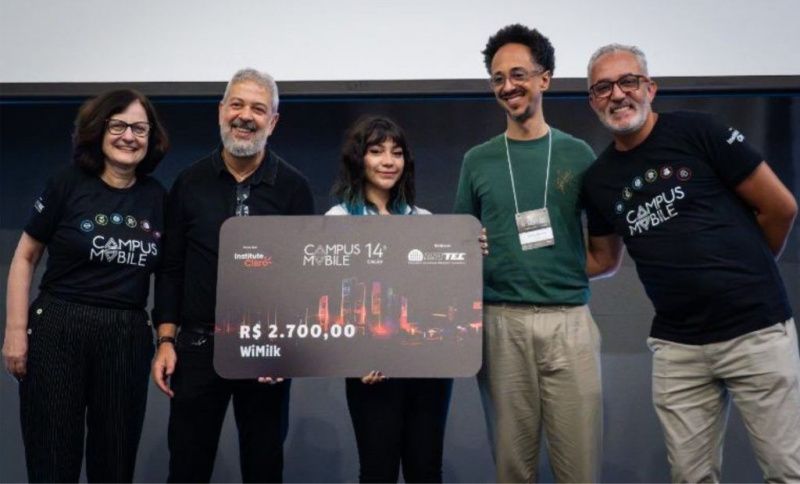
The project received R$60,000 through Agro Startup, a programme promoted by Senar and Sebrae, in 2025. Later international awards, including one from BRICS, did not carry cash prizes but provided the startup with showrooms in China and San Francisco. WiMilk then won the Green Tech & Agtech category at the 14th Campus Mobile, organised by Instituto Claro with institutional support from the University of São Paulo’s Polytechnic School and Claro’s beOn innovation hub. The competition received 417 entries from 894 students representing all 27 Brazilian federal units.
The Campus Mobile award included R$2,500, followed by a further R$9,000, and a week-long immersion in Silicon Valley, with accommodation, travel, meals and transport covered. From September 18, two students from Goiás were scheduled to visit GitHub, Google and AWS. The team said it would use the trip to seek links between agribusiness in Goiás and the US market.
WiMilk’s two-year business plan is also tied to reporting requirements for Fapeg, a funding agency that had previously selected the students for another award. The team plans to spend recent prize money on equipment and commercial and legal courses, has hired additional people to label data for the AI system, and expects to complete development this year, with sales planned for 2027.