US milk output rises 2.7% as butterfat reaches record 4.32%
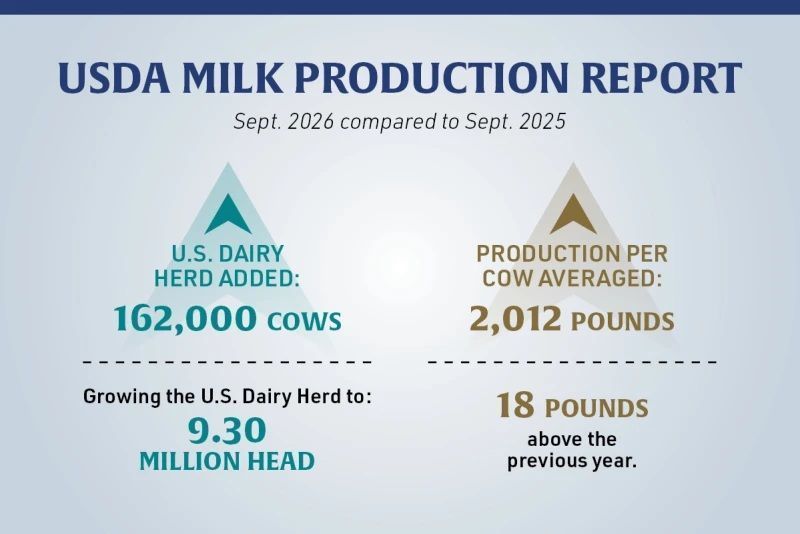
The milking herd in the 24 states numbered 9.30 million, an increase of 162,000 animals from September 2025. Monthly output per cow averaged 2,012 pounds, exceeding the previous September's figure by 18 pounds. For July-September, production across the United States amounted to 59.5 billion pounds, a year-on-year increase of 2.3%. The national herd averaged 9.72 million cows during that quarter.
Kansas recorded the largest percentage increase among states: production rose 14.7% to 492 million pounds as its herd gained 29,000 cows and output per animal increased. Production also advanced in South Dakota, by 7.9%; Indiana, by 7.4%; Georgia, by 7.1%; and Oregon, by 6.6%. Wisconsin, America's second-largest dairy-producing state, added 26,000 cows, taking its herd to 1.306 million. California's output increased just 0.03% to 3.29 billion pounds, although its herd expanded by 5,000 animals to 1.718 million. Arizona's production fell 4.9%, alongside a reduction of 10,000 cows.
Geiger, CoBank's senior vice-president for strategy and business development, presented figures showing that butterfat concentration had increased from 3.71% in 2011. Over the same period, the protein share rose from 3.08% to 3.34%. CoBank's analysis attributes 72% of the improvement in protein over a decade, and 62% of the butterfat gain, to genomic selection, the use of sexed semen and breeding indices covering multiple traits. The analysis identifies genetic progress, rather than temporary changes to feed rations, as the driver of these component gains.
American milk now has a higher butterfat concentration than the European Union's average of 4.25%. Its protein concentration, however, remains below the EU's 3.95% and New Zealand's 4.0%. Optimal cheese yields require protein relative to fat to exceed 0.8. As the US ratio has declined, producers of American-style cheddar, Colby and Monterey Jack have invested in equipment that mechanically separates cream. This allows them to adjust the milk entering cheese vats and keep fat content, measured on a dry-matter basis, within retail specifications.
Cheese output from each 100 pounds of milk has risen to 11.6 pounds, compared with 10 pounds in 2010. Domestic consumption per person has remained relatively steady. Against that production and consumption background, the National Milk Producers Federation and the U.S. Dairy Export Council project that American dairy exports will reach a record value of $10.5 billion in 2026.
The article links rising worldwide demand for protein to functional nutrition, clean-label products and dietary trends associated with GLP-1 drugs. It identifies finding markets for surplus butterfat while breeding for further protein gains as a central challenge for US dairy co-operatives and commercial producers heading into 2027.









