Urban Acres: Delhi produces 1.5 million litres against 11.1 million needed daily
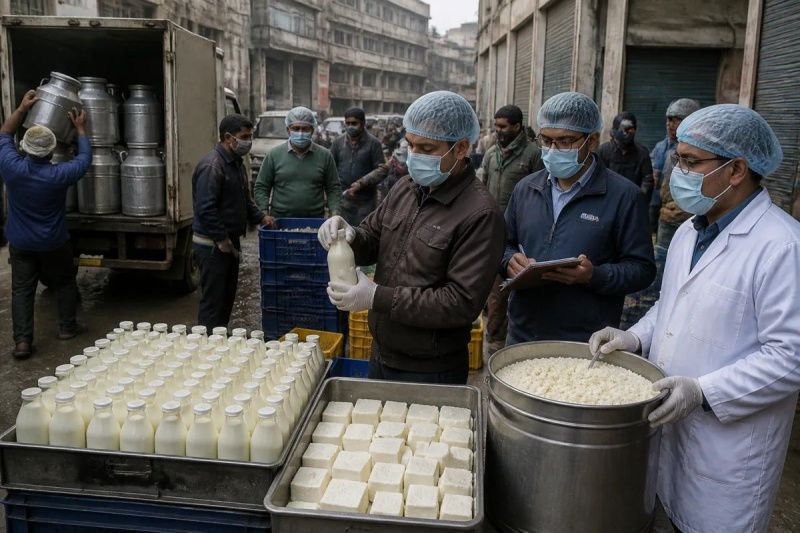
More than 80% of Delhi’s supplies of liquid milk, mawa or khoya, paneer and ghee come from outside the territory, according to the analysis. Supplying states include Uttar Pradesh, Haryana, Rajasthan and Punjab. The production shortfall becomes larger during festivals and the peak wedding season, when demand increases. Urban Acres describes an informal market in counterfeit dairy goods operating alongside these interstate supply chains.
Demand for mawa, a concentrated milk solid used in sweets, is approximately 12,000 kilograms a day. Daily wholesale purchases of paneer are about 15,000 kilograms. Cooperatives and corporate dairies provide around 2.5 million litres of packaged milk each day and account for roughly 66% of the formal branded retail segment. Sweet-makers, bakeries, roadside food businesses, caterers and banquet venues also buy fats and milk solids in bulk from decentralised wholesale markets. The analysis describes uneven testing and limited visibility into the origins and movement of goods in these channels.
Practices documented by food-safety authorities include adding contaminated water to milk and manufacturing synthetic substitutes from vegetable oil, white colouring agents, detergents and urea. Urea raises nitrogen measurements used to estimate protein content. In paneer and mawa, adulterators use low-quality hydrogenated vegetable fat, industrial starch, chalk or flour to reproduce the consistency and density of dairy solids. Investigators have also detected non-edible oils and chemical thickening agents used in place of milk fat.
Municipal and state enforcement operations between late 2025 and late 2026 covered industrial areas including Bawana, Nihal Vihar and Raghubir Nagar, as well as the wholesale centres of Mori Gate and Okhla. Authorities seized and destroyed thousands of kilograms of adulterated dairy goods. Reported seizures included 7,600 litres of counterfeit ghee, more than 4,100 kilograms of substandard mawa and paneer, and banned industrial substances. Nationwide surveillance over a twelve-month period examined 33,405 dairy samples, of which 12,780 failed to conform to standards. Regulatory breaches led to more than 12,000 prosecutions of food-business operators.
Central government projections put Delhi’s daily milk demand at 17.35 million litres by 2030, up from 11.1 million litres. The projections attribute the increase to urbanisation and greater purchasing power. The analysis also notes rising consumption within the supplying states of the Indo-Gangetic plain and calls for coordination between states on food safety as the capital’s requirements expand.
Urban Acres recommends shifting enforcement beyond raids on wholesale markets towards digital tracking of batches from the farmgate. Its proposed measures also include increasing the number of formal cooperative procurement centres and requiring automated milk analysers at wholesale collection points. The analysis presents these changes as steps to address synthetic substitutes and protect consumers heading into 2027.