The Shadow Economy Dominates Over 80% of Russia's Sheep Breeding Market
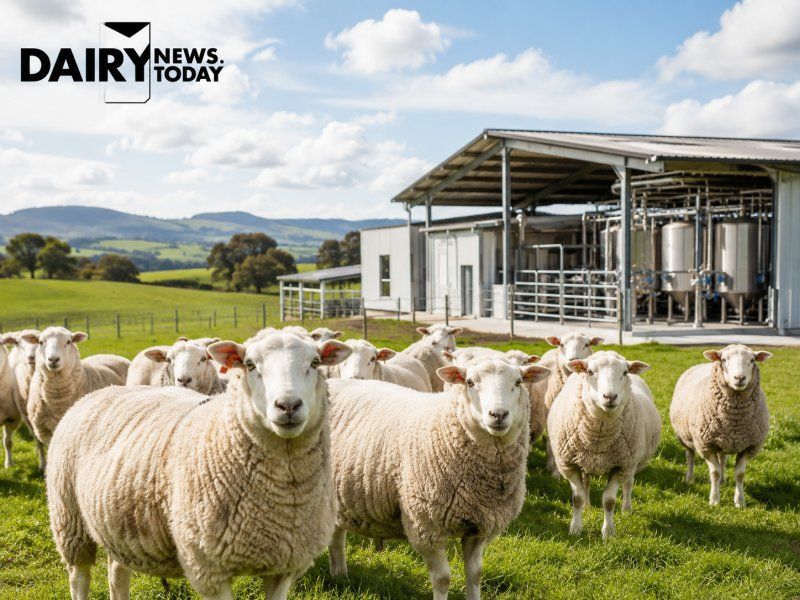
The statement was made at the agricultural exhibition Zolotaya osen. According to the presentation by the National Sheep Breeders Union, in 2023, the sheep population in Russia was 17.8 million heads, which is more than three times lower than in 1990.
The profitability of the organized sector is estimated by the union at minus 22%. "The legal businesses operating in sheep breeding today do not earn profits, losing a certain amount of money on every kilogram of lamb," said Grigorashchenko.
Out of the total production of 194,000 tons of lamb, 40,000 tons were processed through the Merkuriy system. The remaining 154,000 tons, or more than 80% of the stated volume, were classified in the presentation as being part of the illegal market.
According to the head of the union, sheep breeding is mainly undertaken by diversified companies and farms, which offset the losses in this area with profits from other activities. Grigorashchenko linked the sector's unprofitability to both the shadow economy's scale and the industry's lack of industrialization stages, which sectors like dairy farming, pig farming, and poultry meat have already undergone.
The presentation suggests that scaling up allows for reduced control costs and the establishment of long-term contracts with processors. One development option is the consolidation of small farms around a breeding nucleus, feed base, and service infrastructure.
Grigorashchenko mentioned individual projects by Miratorg, Damate, Kavkazskaya baranina, and other companies, noting that such initiatives remain isolated while the industry lacks industrial growth comparable to the development of dairy farming from 2005 to 2015. The potential to increase production is estimated by the union at 800,000 tons of lamb annually.
For a transition to an industrial model, Grigorashchenko estimates that a developed market, joint efforts from businesses and regulators, and an increase in lamb consumption are necessary. Additional state support during the transition is estimated by the union at 1.5–3 billion rubles annually. Including sheep breeding in the Big Livestock Project is suggested as a potential tool for scaling the sector. Available resources include the genetic base, pastures, and scientific and educational potential, as highlighted by the union's head.