Santa Rita wins gold for dulce de leche at Mato Grosso dairy festival
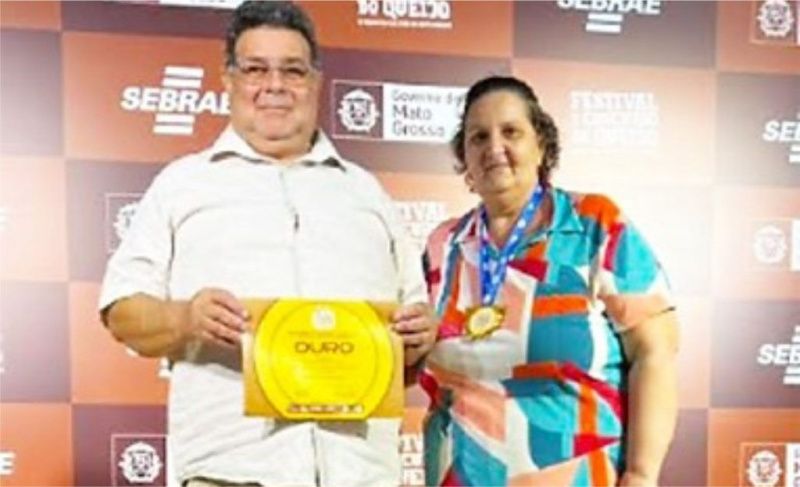
The competition was organised by Sebrae-MT in partnership with the state government. It was the couple’s first entry in a contest assessing the flavour and quality of artisan foods, and their dulce de leche received the award for the state’s best sweet. Antônio said a technical team had encouraged them to enter after visiting their smallholding to assess their cheese during the application process for an artisan-product seal. The visitors sampled both cheeses and sweets. “The team tasted our cheeses and sweets and was delighted. They insisted that we had to compete at the festival,” he recalled. The couple said they had not expected medals or titles despite regularly receiving praise from customers.
Antônio and Silvana are originally from Goiás. Before first moving to Mato Grosso, they spent several years in Campo Grande, in Mato Grosso do Sul, where Antônio worked for a food company. In Mato Grosso, he established a business buying food and assembling basic-food baskets for resale. Sales expanded, but he said he failed to manage the operation properly. The same people delivered the baskets, collected payments and recorded incoming money. By the time he recognised the financial problem, the amounts owed to the business were insufficient to cover its supplier debts.
The couple sold their accumulated assets, including their house, but kept a plot of land near Cuiabá. Antônio recalled telling Silvana that he would rather sell the house than the smallholding, and she agreed. Before they left, Silvana, a devotee of Saint Rita of Cascia, named the property after the saint. The family returned to Campo Grande, where Antônio took paid employment. Less than two years later, in 2010, they moved back to Cuiabá, initially planning to live in the city while developing productive activities on the land, about 60 kilometres from its centre.
Their first venture on the property was a small watermelon crop. Antônio then bought a few cows, and the couple began making cheese from their milk. As cheese production increased and they added sweets, they moved to the smallholding. It now serves as both their home and Santa Rita’s production base. The range includes fresh cheeses, which were the business’s first dairy products, matured cheeses and queijadinha, a cheese-based sweet. Alongside its award-winning creamy dulce de leche, Santa Rita makes a curdled-milk sweet known as cachorrada and milk sweets cut into small bars.
Santa Rita also prepares pork products, selling frozen portions of sausages, meatballs, burgers and diced pork leg. As the business expanded, Antônio began purchasing some of the milk used in sweet-making from other small-scale producers. He also buys pork from neighbouring producers. Antônio and Silvana carry out the work with the assistance of one employee. They describe the workload on the property as demanding, but say they would not exchange their current way of life for another activity in the city.
Initially, the couple sold their food door to door in Cuiabá’s neighbourhoods and residential developments. For about eight years, fairs at the Centro Político Administrativo, a complex housing dozens of government bodies, have been their principal sales outlet. They participate in five fairs, with state public employees making up their main customer group. Rita de Cássia Leite, an employee of the state labour and social-assistance secretariat, said she was buying directly from them for the first time after previously eating products purchased by colleagues. Unaware of the gold medal, she bought the winning sweet and half a cheese to share at work and take home.
The couple travel to Cuiabá four times a week, arriving early and returning to the smallholding at the end of the morning. At weekends, their children, children’s spouses and grandchildren gather at the property. “It is a joy to be together. They are here every weekend,” the couple said. When their children leave for the city, they take food from the farm, including free-range chicken, sweets and cheeses.