Rural youth population in Brazil’s Rio Grande do Sul fell 31.5%
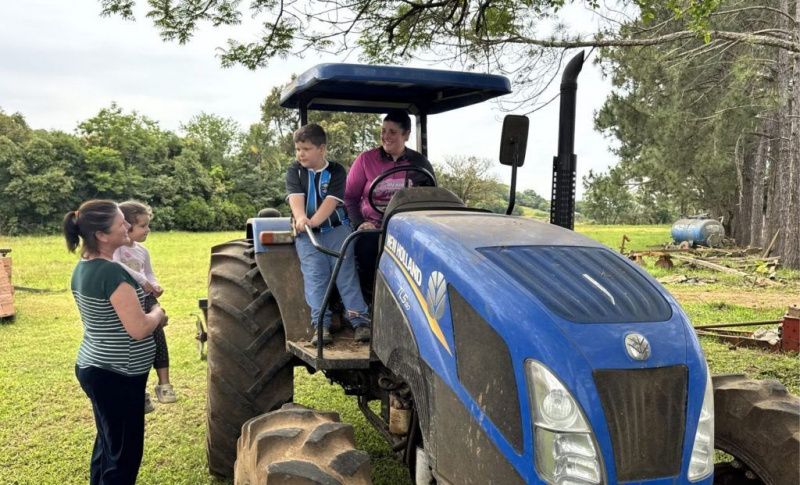
The figures form part of a discussion about farm succession in the Vale do Taquari, where agricultural holdings supply regional industrial businesses. Economist Fernanda Sindelar said the decline in young rural residents could undermine workforce renewal and the continuity of farms serving those businesses. She said production and rural incomes could fall, while processors might need to obtain inputs from other regions at higher cost. Agriculture also supports manufacturing and services and influences municipal receipts from ICMS, a state tax. Sindelar said she had observed the succession difficulties locally, particularly in dairy farming.
Elizângela Mainardi Roso Teixeira, a regional technical assistant at Emater/RS-Ascar, said succession depends on earnings, financial independence and young people’s involvement in farm decisions. “It is not enough to encourage young people to stay in the countryside. Conditions must be created so that they want to stay and can earn a decent living from the activity,” she said. Extension workers Diego Oliveira and Letícia Mairesse identified the search for career opportunities, difficulties balancing work with quality of life, and limited management autonomy as reasons for leaving. A lack of successors can result in farms ceasing operations, land being sold or leased, and production becoming more concentrated. Teixeira said parents’ control over decisions and a lack of planning also hinder generational transitions. She advocated gradually increasing young farmers’ responsibilities, accompanied by technical advice and freedom to make decisions.
Emater helps farms with financial planning, credit applications, production diversification and training for young entrepreneurs. Its initiatives include Pronaf Jovem, family-farming production projects and support for agricultural processing businesses. To examine rural young people’s prospects more closely, Emater and the Secretaria do Desenvolvimento Rural are conducting a statewide survey covering 3,987 young people in 464 municipalities. Data collection is in its final stage.
Andrieli Wermann, 31, has remained on her family’s farm in Pedreira, in Bom Retiro do Sul, where she worked with her parents, Ângela and Sergio André, from childhood. The family initially combined tobacco cultivation with dairy cattle before milk became its sole source of cash income. The eldest of three siblings, she said her sister had never wanted to remain on the farm and her brother had stayed for a time; they now work at a school and a bank, respectively. After completing secondary school in 2012, Wermann undertook agricultural technician training to bring additional knowledge to the family’s established practices. She said technology had reduced some of the heavy physical labour compared with her parents’ generation, but daily responsibilities remained a deterrent for young people. “There are no weekends here, are there? It is Saturday and Sunday, straight through,” she said. The farm was hit by the 2024 flood and is restoring its facilities and production. It has 100 cattle, including 35 lactating cows, and produces 600 litres of milk a day. Wermann plans to continue and expand production.
Alex Possamai, 36, followed a different route back to his family’s property in Linha Daltro Filho, in Imigrante. One of Rudi and Simoni’s four children, he belongs to the third generation on the farm. His family, of German and Italian descent, continues to produce milk and poultry. Possamai said he had initially seen few prospects for advancement in agriculture and had sought work elsewhere. He spent much of his working life in the private sector and was employed at a brewery around the time of the pandemic when he decided to return. His parents and grandparents welcomed the decision, he said, but he did not want to join the existing dairy and poultry operations.
Working with his siblings, Possamai established Cachaçaria Possamai, a business handling every stage from sugar-cane cultivation to sales of finished spirits. He had originally wanted to make beer, but said pandemic-era input prices were too high. The family chose cachaça after identifying what he described as a growing market and approached Cooperativa Sicredi for investment capital. The company now also makes liqueurs and has premises for visitors to gather and buy its products. Possamai’s aim is to develop the property into a tourism business, with cachaça providing its economic base.
Carlos Roberto Wagner, a rural-segment adviser at Sicredi Ouro Branco RS/MG, said the cooperative had observed young people returning to farms in the Vale do Taquari and Vale do Caí. He described the generational change as gradual, with returning family members identifying opportunities to earn income and diversify production. The cooperative has promoted examples of families developing their rural businesses to encourage succession and show younger generations opportunities for innovation and financial independence. Wagner also said people over 60 were accounting for a smaller share of its rural membership, which he interpreted as another sign of gradual renewal. He said farm continuity depends on planning, access to credit and young people taking part in decisions. Production and electricity cooperatives are among the other institutions involved in supporting agricultural activity.